

Content warning: mention of suicide
Good People is a bi-weekly column highlighting McGill students doing community-oriented work on and around campus. Because it’s important to celebrate good people doing good things.
2.5 million people in Canada do not have adequate care to support their mental health needs, according to a 2024 report by the Canadian Mental Health Association. In Quebec, psychological distress among adolescents rose to unprecedented levels in 2025. For young people in particular, the steep cost of mental health care is a significant barrier to accessing psychological services.
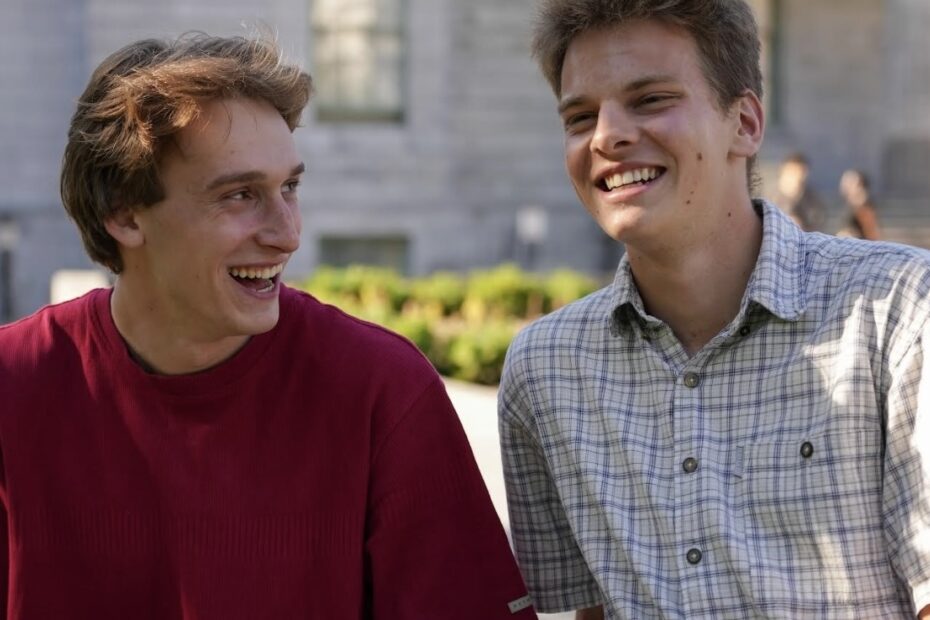
The mental health needs of students do not go unnoticed by Jesse Millman and Mekhi Graham, both McGill undergraduates studying Cognitive Science. In 2025, Millman and Graham launched their free student mental health service, Eye 2 Eye, which provides psychological guidance constructed upon the shared understandings and experiences of students. Within this framework, students complete an online survey to be connected with a peer who is going through similar struggles — such as loneliness, academic stress, or homesickness — with the hope that their shared experience can lead to psychological healing. Once matched, students receive guidance and tips from Eye 2 Eye team members to navigate their conversations.
The Daily spoke with Millman and Graham about founding Eye 2 Eye, men’s mental health, and why emotional vulnerability is so powerful.
This interview has been edited for clarity and conciseness.
Enid Kohler for The McGill Daily (MD): I want to start with your friendship. How did you meet and begin Eye 2 Eye together?
Jesse Millman (JM): Great question. It goes as far back as a McGill friendship can go: to Frosh week. We were both in the Arts & Science Frosh, which instantly set a precedent for a very wonderful friendship. I feel very grateful to have both social and academic aspects of my relationship with Mekhi.
I remember the idea [for Eye 2 Eye] coming to me in the summer after first year. It was a result of having all these similar conversations with people around me, about so many people feeling a little bit stranded and isolated from university culture. I came to Mekhi with the idea in the fall of second year.
Mekhi Graham (MG): I have a lot of memories of late night grind sessions studying with Jesse. I remember one day in the library, we were studying and Jesse was like, ‘Yo, dude, I have this idea.’ And he pitched it to me. I thought it was super cool. We started brainstorming from there. Honestly, every time we were supposed to be studying for class, we ended up talking about Eye 2 Eye instead. We were so excited about it. Probably not the best for the GPA, but we ended up with a pretty cool thing. No regrets.
Now, we have the website up and running thanks to Jesse, and we have a little team now, working with two other people who are also in cognitive science. I think we’re in a great spot. We’re currently working on outreach and trying to get it to as many people as possible.
MD: If you wanted to pitch Eye 2 Eye to someone in one minute at a house party, how would you describe it?
JM: Gosh, the amount of one minute house party pitches we’ve done, you’d think we’d be better at it.
MG: Yeah, we should have a script at this point. Eye 2 Eye is meant to be an informal mental health resource. It’s targeted specifically at first-year students who are dealing with issues related to homesickness and struggling to adapt to the new academic and social environment in university. Maybe they’re not really vibing with the party culture, maybe they just haven’t found their people yet.It’s also for people who might think those issues don’t necessarily warrant professional mental health care. I know for a lot of people there’s a stigma around [therapy], and the tendency to think that their struggles aren’t enough to warrant seeing a therapist.
So the idea behind Eye 2 Eye is to give students the opportunity to talk to someone else who’s in the same boat as them, who’s going through the same things. They are then able to make a connection, learn, and grow together.
JM: We’re definitely not anti-professional help. But I think for these issues specifically, while professionals are trained to help you in many ways, the reality is that they still won’t know what it’s like to be a first year university student in the social atmosphere that exists in 2025. We think that’s where real power is held: in each other. It’s a very comforting experience to realize, ‘I’m not the only person feeling these things,’ so that’s what we’re trying to tap into.
MG: Absolutely. Although the McGill Wellness Center and therapy in general can be super helpful for a lot of people, it’s also true that there is just a shortage in general. It sometimes can be difficult to get the services that you need. At the end of the day, anything that can make mental health support more accessible is a really good thing.
MD: Was there a defining moment in your own experience with therapy or in sharing your feelings that inspired you to start Eye 2 Eye?
JM: That’s a really good question. I don’t know if I can speak to a specific moment, but in previous romantic relationships, I’ve felt very lucky to explore vulnerability, and being able to open myself up completely to someone inspired me to share that. I think there’s something really magical about hearing yourself verbalize something about the way you’re feeling for the first time, and being able to articulate it when for months it had only existed in bubbles and squiggles around your head. I think we should all talk to each other more, and that’s what we hope the service facilitates.
MG: Absolutely. I can think back to times in my life where I didn’t have someone I was comfortable sharing my feelings with, so I would keep them all inside and bottled up. I realized once I started opening up more to people, my problems just felt a little smaller, a little more manageable.
MD: I’m curious about the gendered dimension of your work. In Canada, almost one in two men report feeling socially isolated, and men account for 75 per cent of deaths by suicide across the country. About 67 per cent of men have never sought professional mental health care before, according to the Canadian Men’s Health Foundation. As two young men leading a mental health service, how would you encourage people of all genders — but especially men — to be vulnerable?
MG: The biggest thing I would say to other men is that I don’t see being vulnerable as a weakness. It takes a lot of strength, but in my experience, when I’ve been vulnerable with people, it hasn’t led to judgment, but deeper connections. People can understand because you’re both human.
JM: It would be wonderful if we can get some guys who haven’t opened up in this way before to climb over that barrier just a little bit, because I think vulnerability is so magical. Once you grasp it, you unlock the expanse of what you haven’t explored yet, [and all] that exists behind [everything] that you may have repressed for so long.
MD: The theme of this column is “good people doing good things.” In the context of your work with Eye 2 Eye, what does being a good person mean to you?
MG: To me, it means helping others. Having gone through some of those difficult times in my first year and being on the other side of that now, if there’s any way I’m able to give [support] to first years who are currently struggling, I think that’s what it would mean to me to be a good person.
JM: I think everyone has so much value to their experience and so much to share. There really is an infinite amount to learn from the people around us. I think being a good person is both being willing to listen to what people have to give, and giving in the right way.
You can learn more about Eye 2 Eye at eye2eyemcgill.ca or on Instagram, @Eye2EyeMcGill.
If you know good people doing good things who you would like to see featured in this column, email news@mcgilldaily.com.