

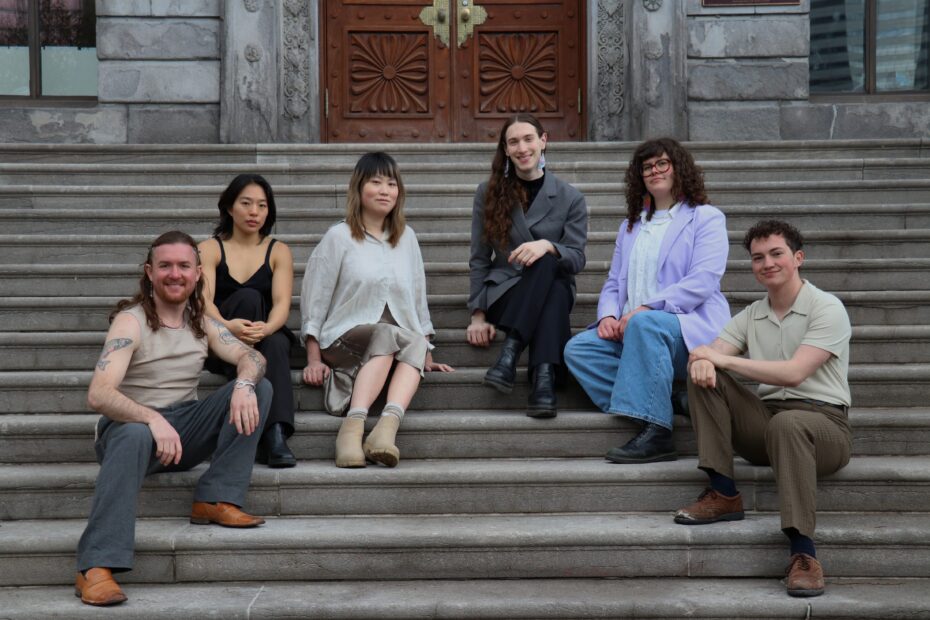
Volunteer-run organization born out of McGill’s Faculty of Law provides free legal information and support for trans and non-binary people in Quebec
Good People is a bi-weekly article series highlighting McGill students doing community-oriented work on and around campus. Because it’ s important to celebrate good people doing good things.
Finn Jacobsen was in his first year of law school in the fall of 2025 when he and his colleagues formed a community of transgender students at McGill’s Faculty of Law.
The Trans Law Collective — a volunteer-run organization that provides free legal information, education, and advocacy support for trans, non-binary, Two- Spirit peoples, and individuals questioning the gender binary in Quebec — was born out of this group of peers. The Trans Law Collective offers monthly legal clinics, free of charge, on McGill’s downtown campus to help students and Montreal residents navigate the legal process for changing their legal name and sex designation. Beyond clinics, the collective also hosts social events, a pre-law mentorship program, and conducts legal research with an eye towards using the law as a tool of liberation.
The Daily spoke with Finn Jacobsen, second-year law student and the Trans Law Collective’s Vice President of Communications, about the organization. We talked about making legal information accessible, building community, and their organization’s vision for growth and continuity.
This interview has been edited for clarity and conciseness.
Enid Kohler for The McGill Daily (MD): To get started, I want to learn more about you. How did you get involved in this organization? What drew you to it?
Finn Jacobsen (FJ): I’m a second year law student, and this club started up last year, when I was a freshman. A bunch of my first year colleagues and I reached out to the trans community in our first year law class. We were really lucky to have a ton of trans people in our 200 person class. We ended up with twelve people in first year and we made this club. We’re building it from the ground up.
MD: How would you pitch the Trans Law Collective to a student who has never heard about it before in 30 seconds?
FJ: We have three main arms. We do legal research, social events — connecting the trans community and students at McGill — and then we provide services as well. The main service we do is legal clinics, like for name and gender marker changes. But in general, we’re just trying to support any initiatives that involve the intersection of the trans community and the law.
MD: From your perspective, why is the Trans Law Collective important? Why is there a need for these kinds of services for the trans community in Montreal?
FJ: When it comes to legal transition issues, I find the process in Quebec is actually really great. It’s pretty open, but it’s so hard to understand, especially if you don’t have a legal background. It can just stump people when it really doesn’t need to; it can be really confusing. Our clinics get people to feel confident to make the changes that they really need. It’s nice to talk to someone who has done it all before and who can just get you sorted and connected.
Generally, trans people are facing a lot of struggles right now. There’s a lot of laws trying to be put into place that make it harder to be trans. So it’s important that we keep on top of that, stay aware, and take control of the rights that we do have as trans people and as people generally.
MD: Since you launched last year, what has the response been like, particularly to your legal clinics?
FJ: Weve had some pretty great moments. It’s been really cool. We worked with one person who was nonbinary and who didn’t always feel seen in their gender. And then they got to submit all these things [paperwork] to get an X marker on all their IDs and to have their chosen name reflected on all their legal documents. At the end of their time at the clinic, they were super emotional and just really excited to have this done. When you see stuff like that, it’s really moving.
MD: What do you have planned for this school year? What’s in the works for your team.
FJ: We’re having a clinic right now, actually. I just left it to come here. For this year, we’re running bi-weekly clinics off campus in Verdun, at the Centre des Femmes. And then we do monthly clinics on campus to try and be as accessible as possible to McGill students. We’re doing social events too. Trans Tuesdays will be starting up soon, just fun social events for people to hang out.
MD: Imagine a student sees a post for Trans Tuesday but feels nervous about attending the event alone. What would you say to them?
FJ: I’d say it’s probably a lot less intimidating than you think. Everyone in the club is really nice. And everyone who’s ever been to these events is always friendly and happy to chat.
Feel free to bring anyone, like a friend if that will make you feel more comfortable. We just want to give people an opportunity to meet other trans people, queer people, or supportive allies on campus.
MD: What is your vision for the future of the Trans Law Collective?
FJ: We’re just focused on continuity right now. We want to make sure the service stays available, especially on campus. Hopefully, the further we go, we can get more funding, provide more support, and do more legal research, too. The sky’s the limit.
MD: The tagline for this column is “good people doing good things.” In the context of your work with the Trans Law Collective, what does being a “good person” mean to you?
FJ: I think for a lot of trans people, it’s just nice to be able to be seen and supported. I feel like the trans community often doesn’t ask for much, it’s just, “let people be who they are and then see them for who they are.”I think that’s what we’re trying to do. Let’s make sure people get access to that.
Learn more about the Trans Law Collective’s services, social events, and opportunities to get involved through their Instagram account, @translawcollective or via their website, translaw.info.