

Good People is a bi-weekly column highlighting McGill students doing community-oriented work on and around campus. Because it’s important to celebrate good people doing good things.
Play is critical for children’s physical and mental well-being, but not every child has the same access to recreational athletics and community socialization. Founded in 2000, Right to Play is an international non-profit organization that seeks to protect, educate, and empower children in disadvantaged communities through the power of play. Since its foundation, it has reached millions of children in Africa, Asia, and North America, namely, Canada; with the aim of harnessing play to support youth enduring conflict, disease, and poverty.
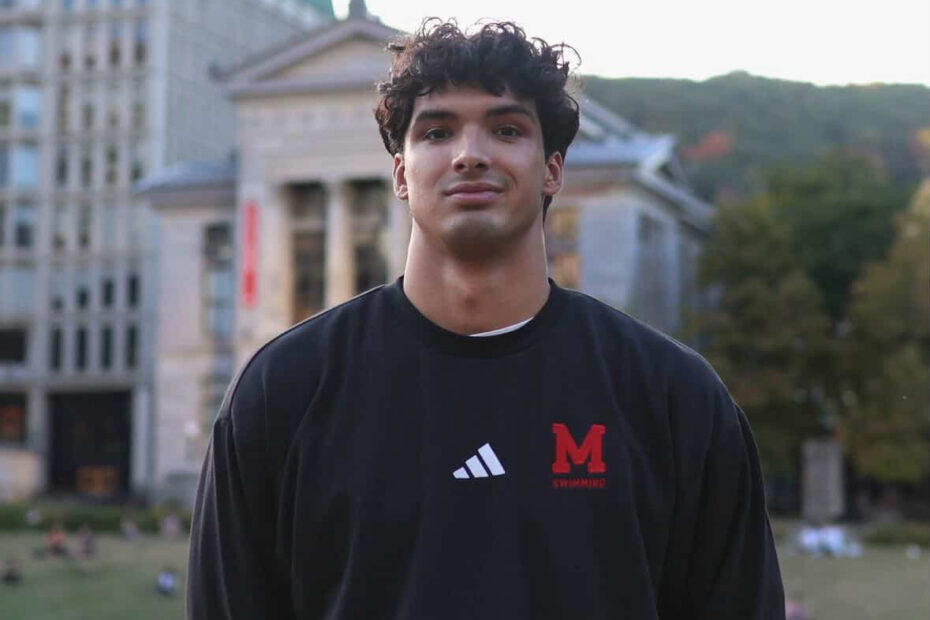
Since 2006, students have been the official university representatives of the Right to Play organization at McGill. They volunteer in local Montreal schools to promote inclusive and accessible play, fundraise for the international organization, and run community events like toy and food drives for underprivileged communities in the city. The Daily spoke with Co-President and U3 Biology and Math student Jack Gill about Right to Play. We spoke about his involvement in the club, the importance of play and physical activity, and why curiosity should be encouraged in youth.
This interview has been edited for clarity and conciseness.
Enid Kohler for the McGill Daily (MD): I’m curious about your own involvement with Right to Play. How and why did you get involved?
Jack Gill (JG): I’m on the varsity swim team at McGill, so I’ve been swimming most of my life. We train almost every day, sometimes twice a day. So sports and being active have been a really important part of my life. It’s allowed me to develop a sense of community, make tons of friends, and build my confidence in and out of the water. I wanted to encourage that in other kids. I started volunteering in winter 2025. I worked in a class with students who have learning disabilities and autism, to encourage more inclusive play. It was really fun to build connections with these kids and slowly see throughout the semester how they got more comfortable and open with us.
MD: How would you pitch Right to Play to a first year student at Activities Night?
JG: Right to Play is not just a club we founded here. It’s a broader international organization. Their whole goal is to empower kids through play to overcome adversity, especially less privileged kids. In Canada, the branch focuses more on [BIPOC such as] African communities who might not have … access to [the] resources that we do, as well as Indigenous communities who similarly don’t have the same resources or access. Our chapter takes from that. We have a lot of events where we fundraise in order to support local schools and youth groups, as well as give back to the broader Right to Play organization. We also volunteer in schools to encourage active lifestyles and fun activities.
MD: Why is it important for kids to have play in their lives?
JG: A lot of children we volunteer with don’t necessarily have access to play. For those with learning disabilities, their parents try to protect them a lot and they don’t necessarily let them do the things other children would do. It doesn’t necessarily give them the opportunity to learn and be curious. Being able to encourage that and let them try things and maybe fail and letting them explore is really meaningful to me.
MD: Do you have a favourite memory of your work with Right to Play?
JG: At one of our schools where we volunteer, we go sledding on this little hill in the winter. One of the kids at the beginning wasn’t able to get up on his own. We would encourage him to get up, but we’d end up having to help him. But later, near the end of the semester, he was able to start getting up by himself with all of us cheering around and encouraging him. It was just so nice when he was able to stand up by himself and show [that] he was fully independent. And now he’s able to do that all the time. His parents might have just always helped him and would never have let him learn to do it by himself. That was probably my favourite moment.
MD: What do you hope kids will take away from Right to Play programming into university and beyond?
JG: I think just life skills, like being able to be independent and do things on your own and interact with other people. Also a sense of community as well as teamwork and the idea of an active lifestyle. With this generation we’re kind of leaning away from that with technology, but it’s so important.
MD: The theme of this column is “good people doing good things.” In the context of your work with Right to Play McGill, what does being a “good person” mean to you?
JG: I think what it means to be a good person is to be able to listen to people and kids and let them guide you. One of the big things I like with volunteering is not necessarily forcing kids to do things but guiding them and helping them choose their own path.
To learn more about Right to Play and opportunities to get involved, visit @rtpmcgill on Instagram.
End note: If you know good people doing good things who you would like to see featured in this column, email news@mcgilldaily.com