Good People is a bi-weekly column highlighting McGill students doing community- oriented work on and around campus. Because it’s important to celebrate good people doing good things.
Founded by five engineering students from McMaster University in 2013, Queer Engineer is McGill’s chapter of EngiQueers Canada, a nationwide nonprofit organization that promotes “diversity and belonging in engineering.” Queer Engineer creates welcoming spaces for McGill Engineering’s queer community, hosting events such as craft nights, monthly socials, and professional networking events.
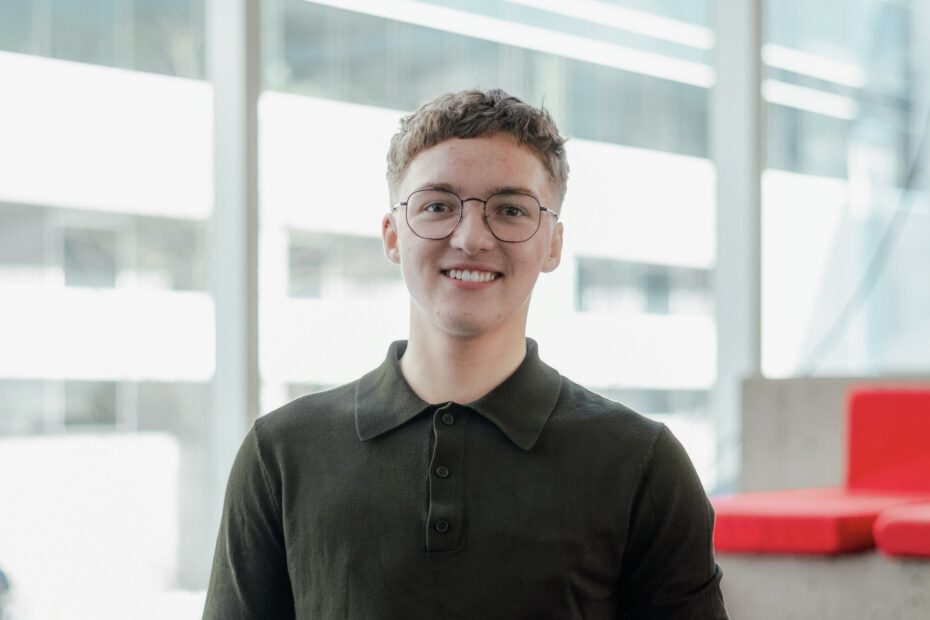
The Daily spoke with Ken Sippola, an undergraduate Chemical Engineering student at McGill and President of Queer Engineer. We talked about the club’s evolution and recent growth, what a safe space looks like, and why queer inclusion and representation in the engineering industry matters.
This interview has been edited for clarity and conciseness.
Enid Kohler for the McGill Daily (MD): I’m curious about your role within Queer Engineer. How did you get involved in the club, and why?
Ken Sippola (KS): I joined the club in 2022 because I wanted to be a part of a community of queer engineering students. I wanted to be a part of a movement to improve the visibility and the acceptance of queer people in engineering.
The club’s been around since 2013, but it has ebbed and flowed in its activity. At first, there were no roles on the executive team, so IaskedifIcouldsitinon meetings. When a role eventually opened up, I became Vice President of Finance. However, when I was away on an internship, for about a year, the club was less active. When I came back from that internship, I realized I was kind of the only one left. That’s when I started stepping up into the role of being President.
I just knew I couldn’t let it die on my watch; I had to do everything I could to make sure it continued to exist.
MD: How would you pitch Queer Engineer to a prospective student member?
KS: Queer Engineer is primarily a social club about fostering connections and community. We host a lot of cozy events like craft night, skating night, things like that. But it’s also a great way to make professional connections and get involved with the community.
MD: On that note, how has the McGill community responded to having a space dedicated to queer inclusivity in the engineering field? Why is it important to have this kind of community?
KS: The response has been super positive. A lot of people didn’t know about us before, so when they found out that we existed, they were like, ‘oh, wait, that’s so cool.’ The Engineering Undergrad Society (EUS) was really, really helpful in making sure we have the resources to get going again.
Something I think about a lot is the definition of a safe space, a space that you walk into and feel accepted. Walking into a space and knowing you’re not going to get hate-crimed is very different from walking into a space and knowing you’re accepted. So even though the majority of spaces on campus are at least relatively safe, our club is about getting to that level when people know they’re going to be accepted and can be their true selves, which is why [Queer Engineer] is so important.
MD: That’s really well said. You’ve already touched on this a bit, but in your experience, what have you observed about the level of queer inclusivity in the engineering field?
KS: I’m from rural Saskatchewan, so growing up, to be honest, I never thought that I would be able to work as an engineer in a way that I could be authentic to myself. I’ve done multiple internships and I have found it to be more accepting than I expected, but it definitely varies company by company. I know there’s also a lot of people who don’t feel comfortable being their true selves in the field, even though they don’t feel discriminated against directly.
They often can’t mention things like, ‘oh yeah, on the weekend I was with my boyfriend,’ in casual conversation. There’s still that level of hiding in a lot of engineering disciplines. And of course, there’s a lot of places where it’s just outright unsafe to be out. I would just emphasize that there still is a long way to go.
MD: Do you have a favourite memory of your work with Queer Engineer, or a moment that stands out to you in particular?
KS: That’s such a good question. One thing that I’ve found really fun and interesting in the last year is our merch and stickers that say, “Queer Engineer,” with a little logo. I’ve been really happy with how many people want to take the stickers and put it on their laptop[s], even if they’re not necessarily queer. I also think it’s great because then people, especially new students, can see these stickers and feel more comfortable.
The other thing I’ve been really impressed with is how much engagement we’ve gotten in the last year. Before, the club was a lot quieter and we had a lot smaller events, but recently our reach has been much larger. Our comeback has been more successful than I actually anticipated, so I’m really excited about that.
MD: Do you have a vision for how Queer Engineer will evolve in the future?
KS: This is something I’ve thought about a lot because I’m graduating this year, so I’m kind of passing the torch. When I became president, I really thought about, ‘how can I form this group in a way that it’s going to continue after me?’ What I hope to see is that it will continue being active, host social events, and also become more involved in professional events and advocacy. I have faith that the future generation will carry the club on well.
MD: The theme of this column is “good people doing good things.” In the context of your work with Queer Engineer, what does being a “good person” mean to you?
KS: To me, it means making things easier for the people who come after you. So that future Queer Engineering students, for example, have an easier time. In general, just trying to leave an environment better than when you arrived.
Find out more about Queer Engineer on Instagram, @queerengineermcgill.
If you know good people doing good things who you would like to see featured in this column, email news@mcgilldaily.com.
Editor’s Note (26/01/26): The print version of this article features an incorrect spelling of Sippola. This is the correct version.