

A friend of mine has recently become obsessed with hockey. I can be sure she knows on any given night whether there is a game happening and which teams are playing in it. Once, while sitting across from her in the library, I heard her exclaim with joy having just discovered that her streaming service came with access to TSN, a Canadian Sports broadcaster. In the midst of our first finals season at McGill, she stayed up to read all six Game Changers novels, written by Canadian author Rachel Reid, in anticipation of the series’ television adaptation: Heated Rivalry. What was *I* doing, while my friends’ conversations progressively began centering around this show?
As my stress levels faced a meteoric rise, so too did Heated Rivalry‘s popularity. Originally premiering online on Canadian streaming service Crave on November 28 2025, the show quickly won audiences’, as well as critics’, hearts, becoming the Crave’s most watched original series to date. It was then picked
up by HBO Max to be distributed to American and global audiences.
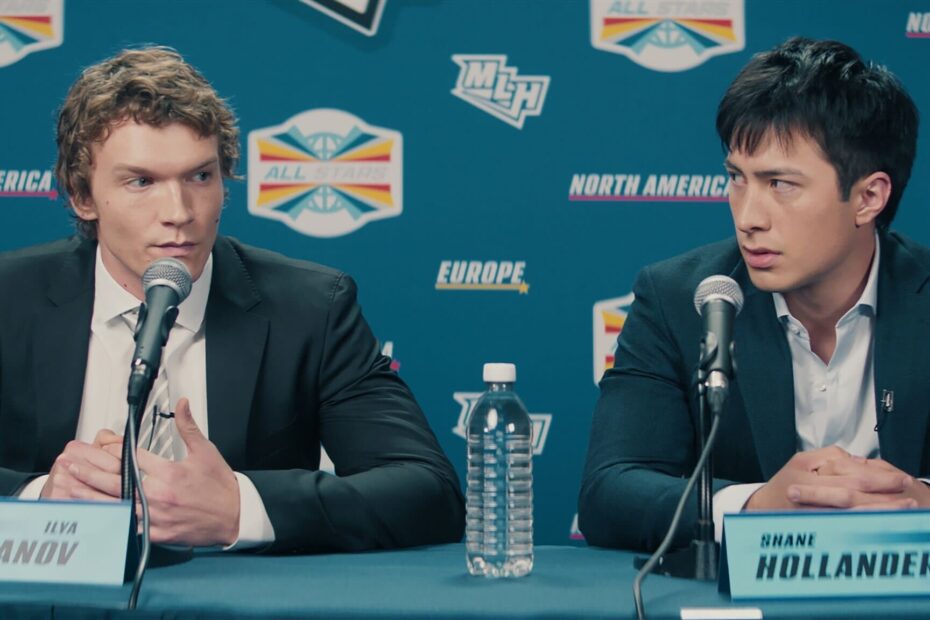
The sports romance follows two rival hockey players in the fictional Major Hockey League: Canadian Shane Hollander (Hudson Williams) and Russian Ilya Rozanov (Connor Storrie). The pair first face off in their rookie season, kickstarting a secret love affair that spans a decade as their careers and the perceived animosity between them escalates.
The show’s success might be quickly dismissed and reduced by those who attribute it to the physical attractiveness of the stars and the many steamy sex scenes. However, what has truly captured viewers’ attention is its depiction of the reality of queer existence in men’s professional sports. The closeted players show tremendous vulnerability as they navigate prejudices that hinder their relationship; a moving portrait of the flaws of acceptance and inclusion in our society.
During their press tour, the show’s cast and crew expressed shock over the show’s reception. However, having been an avid TV show watcher since the pandemic (quiz me about matching the show to the
streaming service), I was less surprised. In recent years, the cultural landscape has seen a rise in content about same-sex couples, particularly male ones. Netflix’s Heartstopper and Young Royals series, both about young male couples, have large audiences, despite the latter’s original Swedish dialogue and setting being more foreign to North American viewers. The primary audience of these series tends to lean towards young females, something The New York Times recently affirmed in an article containing Heated Rivalry‘s statistical demographics.
Why would women want to read and watch love stories between two male characters? And why are these shows being marketed towards them? Heated Rivalry’s press tour initially targeted media outlets with a largely female audience, such as Teen Vogue. This is deeply political. Love stories made for women typically offer no reprieve from their societal subordination. In sex scenes, women are often dominated and objectified. When the time comes to be emotionally vulnerable, the woman is relegated to the role of caretaker, tending to her male love interest’s emotional wounds. For female viewers, this is exhausting.
Hence, it is not only in fantasy stories of princes and dragons that they look for an escape but in the dynamics of Heated Rivalry and other similar shows. When there is no woman in whom the woman might see herself, she can become a passive observer. If she wants to, she can choose to identify with a male, where she can momentarily occupy a position of authority and explore masculine aspects of her identity. “Her sexual fantasy needs not equate to her sexual reality,” Professor of Sociology and Sexuality Studies at San Francisco State University, Clare Sears tells The Guardian. In mainstream media depictions of same-sex male relationships, both men are vulnerable with each other, with the role of caretaker and investment in the relationship shifting more fluidly between a couple who occupy the same position in the patriarchal hierarchy. This resonates more deeply in the world of men’s professional sports; an environment that fosters and upholds toxic ideals of masculinity.
The show might particularly score (allow me this one bad hockey pun) for Montrealers and McGill students, being set and filmed in Montreal and other parts of Canada. Director Jacob Tierney and cast members such as François Arnaud, who plays hockey captain Scott Hunter, are both from Montreal and have been making promotional appearances in the city since the show’s release. One of the show’s romantic leads, Shane Hollander, plays for the fictional Montreal Metros team. It was only fitting that the Montreal Canadiens played the trailer for the series during a recent game on Pride Night, an act that received praise as it rebelled against the NHL’s controversial public stance on inclusion in the League.
This is not just an article urging you to watch Heated Rivalry or read Game Changers. If it were, I would conclude by praising its embracing of sexual diversity and the underlying love and longing between its characters. A second season has already been commissioned to be released in the next couple of years, if you find you enjoy it. However, more importantly, I hope to convey that it is ignorant to reduce Heated Rivalry to smut and dismiss any of its viewers as simply insatiable. The series holds personal value for viewers, providing a hopeful escape from harsh realities that women and queer individuals face. Moreover, the show’s popularity has sparked a public re-evaluation among fans of the National Hockey League’s values and self-presentation, something that continues to be incredibly necessary.