

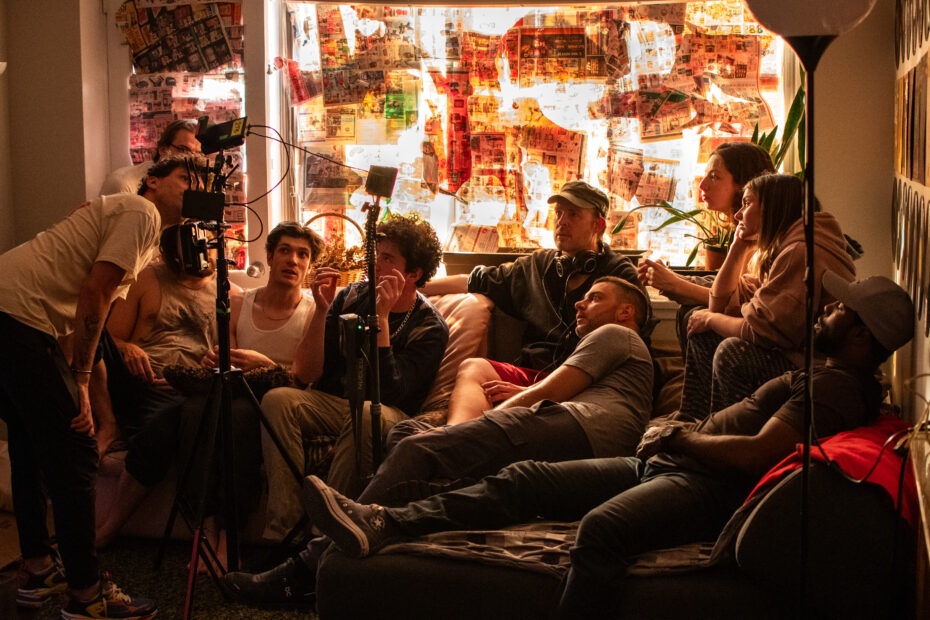
I had no idea what to expect with Island Life. The only clues about the project that co-producer Vincent Copti had sent to me via email were “an intense thriller that might contain violence,” and “watch it with headphones.” Okay. In the morning before my day-long finals grind, I clicked, not yet fully caffeinated, on the link he sent to me.
The next twenty minutes would snap me out of my mildly sleep-addled reverie.
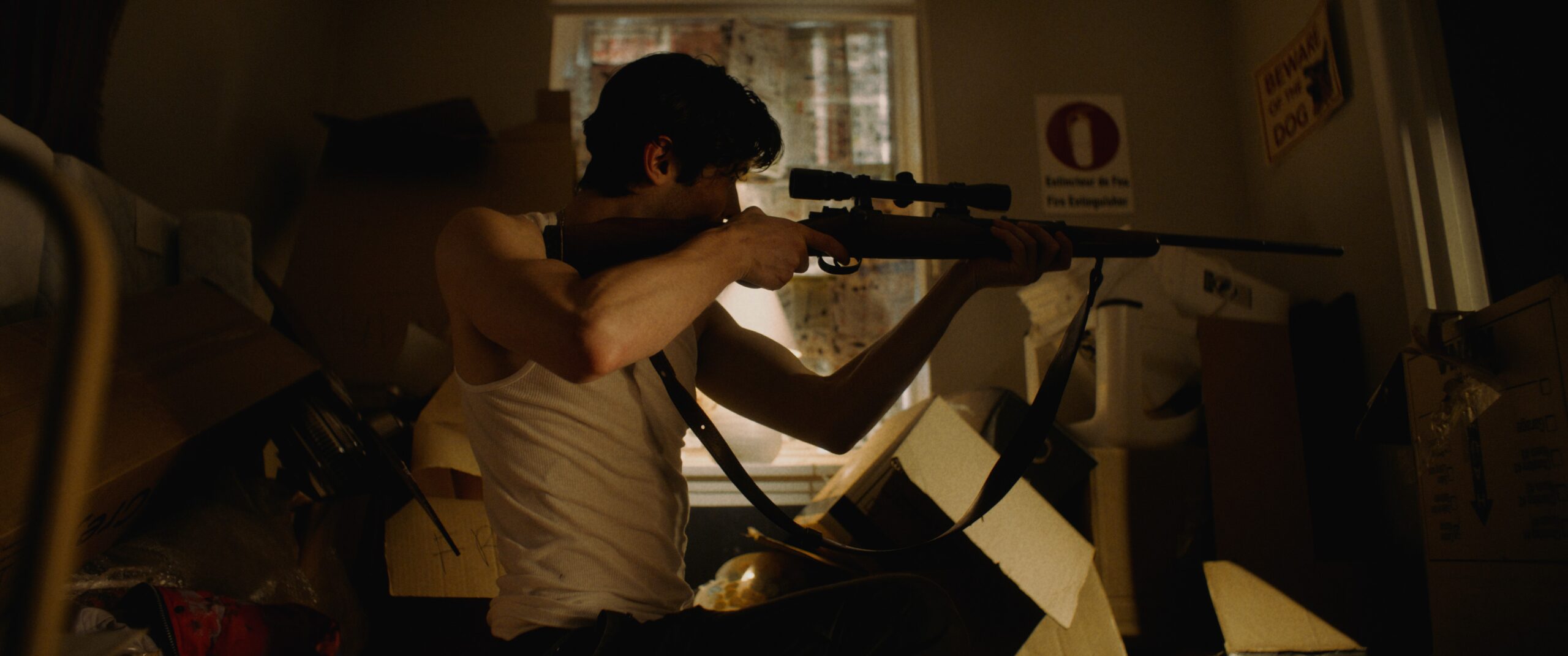
Directed by Canadian auteur Gavin Michael Booth, Island Life is a drama between neighbours. One neighbour plays deafening house music, which drones on in the background throughout the short film’s entire 23-minute runtime; and its organized crime unit neighbours, our protagonists, struggle to lay low in contention with the noise. Shot in one take à la Birdman in a single apartment, the constant tension in Island Life can be attributed not just to the booming background music, but to the volatile frontman of the organized crime unit. Played expertly by local Montreal talent Ben Peters, our protagonist swings wildly between authoritative pack leader and straight-up psychological dictator. Island Life has been admitted into renowned film festivals such as Festival Regard and Fantasia Festival, and has won awards for Best Actor (Ben Peters) and Best Original Screenplay at the Terror in the Bay Film Festival.
Island Life has been in the works since 2019, when it was first conceptualized by Andres Cabrera Rucks, the film’s co-producer and writer, when he was still a McGill student. “I woke up in the middle of the night because my neighbour was playing music, and the whole story just came to mind over the next couple of days,” recalls Rucks in an interview with the Daily. At the time, the short film had been slated to be produced in conjunction with TVM, McGill’s resident student production house, which Rucks had been a producer at. However, the arrival of the COVID-19 pandemic shut down any possibility of the project’s execution, which would subsequently be delayed. However, Island Life remained in Rucks’s mind, and he would approach Copti, whom he had met at TVM’s training programme, to help produce the film at the end of 2021. The two are now part of PanArt Productions, a production company founded by Copti which helped to produce Island Life.
“It’s hard to meet people who are as crazy about something as you are,” comments Rucks. “If not for that training session, neither this movie nor our friendship would have existed.”
According to Anya Kasuri, President of TVM, the TVM training programme is a mandatory facet of TVM membership, teaching basic technical and camera skills. “Besides taking service requests from other clubs at McGill, part of our mandate is to help students carry out their creative projects,” she explained in an interview with the Daily. “A student can come to us with any script or idea, and from there revise it and put together a production team of our members to help realize their vision. We build a community where we get to make films together, and it’s great.”
The leap from making a student film to an independently-produced one is no smooth path. The film industry is notoriously one of the hardest to break into, especially without prior connections. For one, making a film is expensive. Despite The Brutalist’s critical success last year, director Brady Corbet reportedly made zero profit from it, even with the three-and-a-half-hour-long film’s impressively low budget. Moreover, the film industry is rife with nepotism and labour shortages. These, along with spikes in production costs and growing concerns of artificial intelligence (AI) replacing key jobs in screenwriting and violating intellectual property regulations, has led to many professionals leaving the industry altogether.
Copti and Rucks’s tenacity thus becomes all the more laudable. “We were basically starting from scratch, without many connections in the industry considering how we are both not professionals,” says Copti. “This was our first time making a movie with a real budget and really playing by all the conventions of the film industry.” Facebook groups became their go-to resource for finding art directors, assistant camera operators, and even their director Booth. In 2022, casting began, and upon reaching out to the Alliance of Canadian Cinema, Television and Radio Artists (ACTRA), the team screened 158 auditioning actors from Montreal and the wider Quebec area for five roles, narrowing them down through a two-step process entailing an online demo and an in-person audition involving chemistry reads.
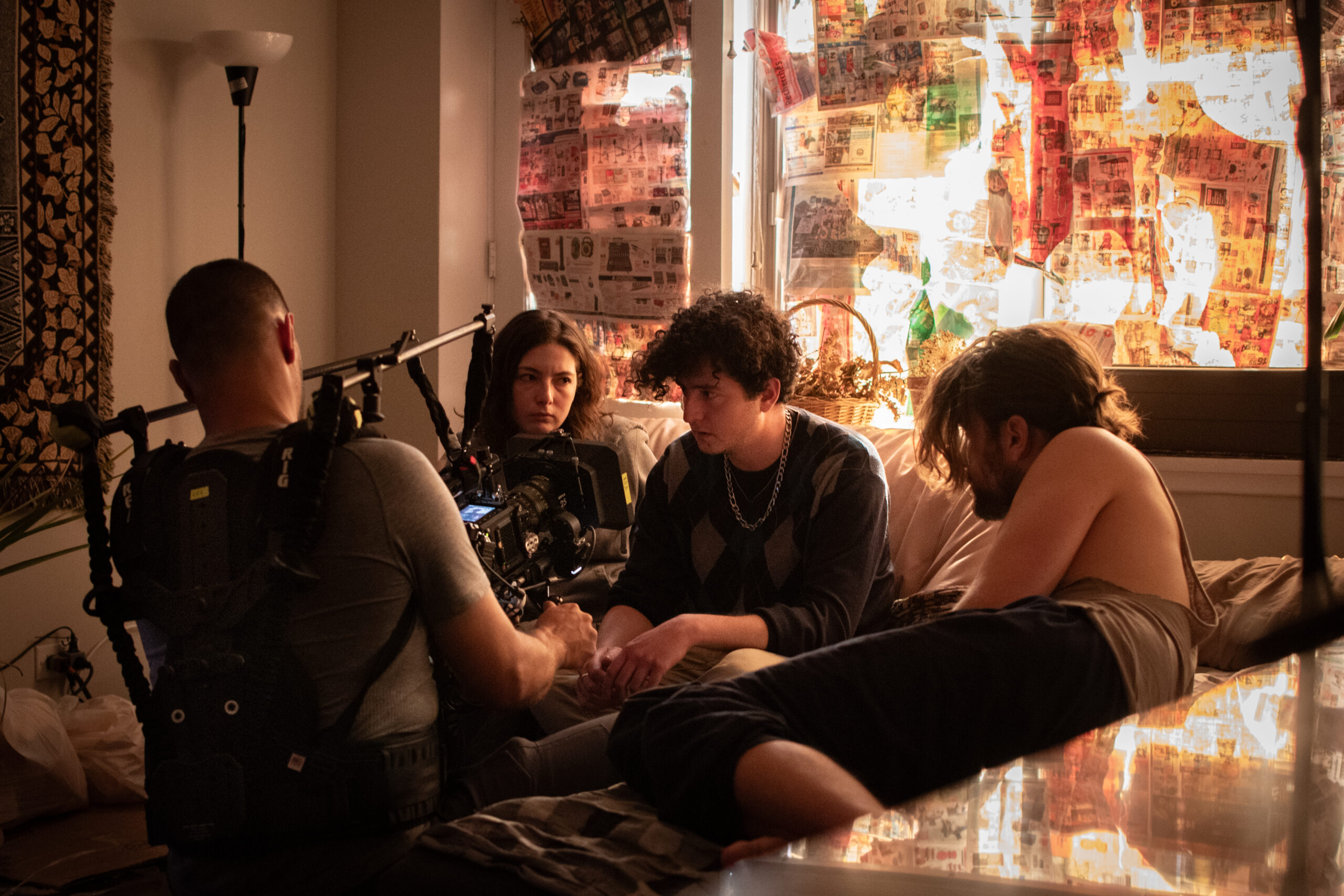
Casting and employment was only the first hurdle. More onerously, there was the matter of costs. The team applied for grants from the Quebec Arts Council and, towards the end of 2022, launched a crowd-funding campaign, which raised slightly over $16,000. All in all, the budget came up to a cool $40,000 consisting of crowd funds and investments from the crew’s own pockets.
“It was really about learning at every stage,” muses Copti. “This whole process has taught us a lot about the independent cinema industry in Canada, and now we’re much better equipped to handle future projects.”
“We were the most ambitious that we could be with this project, especially as two non-professionals,” expresses Rucks. “Having that much money to work with, creating a one-take short film and submitting it to festivals with no guarantee of success. We probably should have started smaller, on a smaller scale with a smaller budget and team, but we just didn’t.”
At McGill, TVM boosts aspiring filmmakers or those simply interested in visual communications by imparting both technical and industry knowledge. “I know many TVM alumni who aren’t currently working in film, but continue to use skills they learned from TVM in their careers,” asserts Nicolas McGuire, former Executive Producer at TVM from 2024-2025. “As a marketing major myself, I feel that TVM has taught me a lot of things about the marketing industry that I wouldn’t have learned otherwise.”
TVM also provides numerous resources for students interested in honing specific applied skills, or just learning about film in general. As the film industry faces a shortage of technically specialized workers, these tools become all the more valuable for aspiring filmmakers. Kasuri, who hopes to work in film, expressed how TVM has familiarized her with the technical and practical side of filmmaking, supplementing the more theoretical approaches of her World Cinemas courses at McGill.
“The best thing about TVM is that it’s really easy to become a part of it. You just need to want to learn,” states Sascha Siddiqui, TVM’s Graphics Coordinator, who joined TVM specifically to learn how to edit despite not having much prior experience. “We have camera cheat sheets, instruction sheets for editing software, and so much more. Any member who wants to brush up on their technical knowhow can also attend our monthly training sessions or tech director’s office hours.”
On the note of student filmmaking, Rucks and Copti encourage student filmmakers to be bold in their work and artistic passions, but to be pragmatic about it too. “It all boils down to whether you want to make films as a hobby or as a career,” declares Rucks, whose goal is to live off his work as a full-time screenwriter and producer. “It’s the best time in history to make films as a hobby because you have all the equipment you could ever need and the ability to find like-minded people through the Internet; but arguably the worst time to make films as a career because the market is just so saturated. When it comes to that, you want to make sure that you’re telling a really good story that shows off your abilities in whatever role.”
“I started out making films with my friends in high school, which gradually expanded into starting PanArt Productions and making advertisements for companies,” recounts Copti. “At the time, I wanted to make a living from production. However, when I started working for a public relations agency, I realized the similarities in both of them — you know, Excel sheets, lots of calls and emails — and I realized I could make meaningful films without necessarily having them be my bread and butter. Now, I mostly make films as an activist; not to make money, but to raise awareness of social issues.”
Film is a visual medium. If a picture speaks a thousand words, then a film, surely, speaks at least a million, and only a small portion of it in dialogue. Despite the pressing concerns that surround film and cinema, there remains a sense of optimism in both Rucks and Copti, as well as the students from TVM. “Art will always have a place in the world,” Kasuri avers, “and I think people are really beginning to appreciate the authenticity that comes with independent filmmaking.”
And, perhaps they are. Anora, an independent film, swept the Oscars and brought home Best Picture in March 2025. More recently, Materialists, distributed and produced by indie collective A24, surpassed $100 million in global box office revenue. Good films, especially with the appeal of being shown in IMAX, are evidently bringing audiences back to the theatres.
When asked about their hopes for Island Life by way of awards, the PanArt duo are more concerned with the film’s impact on its viewers and staff. “This is the first official film I’ve made that hasn’t had an element of social activism in it,” Copti remarks. “I hope people are entertained, but I also hope to show them that they too can do awesome stuff.” As he puts it, they took many “daring steps” in making Island Life, which created a great deal of uncertainty. However, these also led to many unprecedented, fulfilling outcomes: going to festivals, meeting new people. “This creativity is part of the movie industry, but even beyond that, I hope to inspire people to take steps out of their comfort zones.”
Meanwhile, Rucks just shrugs. “To be completely honest, I’ve never really even cared about an award,” he says. “I just hope that it helps us, the actors and the crew involved gain some credibility in the industry.” As an afterthought: “Selfishly, I hope people think it’s well-written too.”
Island Life is available on YouTube from 22 December on The Film Shortage channel.