

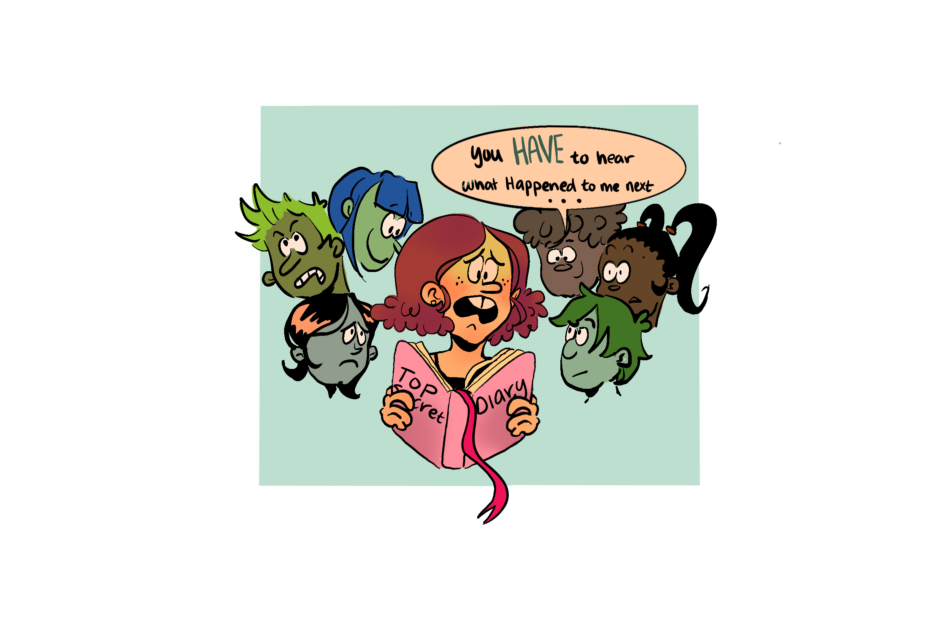
Have you ever opened TikTok one morning and somehow ended up 16 parts deep into the story of a stranger’s divorce? Before you even know it, you’re able to recount every detail about her husband’s drug addiction and his crazy mother. Yet you haven’t actually ever met the woman, and chances are, you never will. Still, somehow, you become personally invested in this stranger’s story. From a 50-part series on an evil ex-husband to public friendship feuds where they “bring the receipts,” sharing personal stories via social media has become a prominent component of internet culture. However, somewhere along the way, we forgot that some more extreme stories are just meant to be shared among our personal circle. What began as a way to connect with others and find community has evolved into a toxic online environment that encourages the public display of private experiences, not only unsolicitedly exposing viewers to strangers’ trauma but also shaping the ways that we understand privacy.
But why does oversharing even happen? For starters, it can feel good to vent your problems on the internet, as it offers almost instant validation or advice from others. Often, it can even feel easier to share personal stories on social media, as there is a sense of anonymity behind usernames and online profiles that can erase the expectation to meet certain social boundaries. You don’t have to look your
audience in the eyes when telling the story, they don’t need to know your history, and you can more easily manipulate your story to generate greater sympathy. As hundreds of likes, comments, and messages flood in, the poster can begin to feel seen by an online community, replacing the support and relatability that may be missing from their personal lives.
Further, the crazier the story, the more likely it is to go viral, which can add to creators’ desire to share wild — and often very personal — life events. In addition to receiving validation from strangers online, there are algorithmic motivations involved with sharing stories with high shock value. For those posting these stories, receiving a higher amount of views can come with the ability to monetize content and get brand deals. On the other hand, social media algorithms keep track of what videos get engagement, and push this kind of content onto more and more feeds. Put simply, sometimes a person will share their story online and receive attention that piles on as the algorithm continues to promote it. Hence, they feel validated and continue to share more. Encouraged by their favorable algorithmic engagement, the people who share these deeply personal stories can turn them into a
series, or in severe cases, their brand. One would no longer simply post to help themselves process complex feelings or life events, but to perform for an audience who will engage with their media.
In a viral series titled “Who Tf Did I Marry,” user Reesa Teesa amassed over 500 million views within three days by sharing her experience while married to a pathological liar. As her story gained traction, the videos began to end on cliffhangers and her retelling of her past trauma began to resemble an episodic entertainment series. Furthermore, her favorable engagement granted her “influencer status” that secured her brand deals and monetization with merchandise containing catchphrases from the series like “I Survived Legion.” Her journey illustrates how social media storytimes can transform deep personal trauma into a commercialized performance and personal brand.
Creators aren’t the only ones contributing to a culture of online oversharing. As viewers, we want creators to “drop the receipts”: get into the nitty-gritty details of their personal lives and provide evidence for them through screenshots of chats, photographs, and so on. As consumers we comment, share, demand updates, speculate, and choose sides. In this way, viewers contribute to an online culture of oversharing by rewarding and encouraging over-vulnerability online simply by engaging with it.
So what? How does oversharing affect both creators and consumers of social media, and what kind of repercussions can come from such extreme vulnerability? For one, excessive disclosure of personal information and experiences can negatively impact the way we view ourselves and the ways that our peers — both online and in real life — perceive us. By posting about traumas and personal experiences for the world to see, we expose ourselves to the judgment of complete strangers. While supportive comments can help us feel seen and heard, they also might condition us to measure the value of our experiences in proportion to other people’s reactions. Over time, it can become easy to associate receiving attention online with the way we are supposed to process deeply personal events and their significance. What is so dangerous about the externalization of self-worth and personal experiences is that vulnerability can feel rewarding when an audience responds positively and disappointing when they do not. This affects our abilities to autonomously discern what is important to us, as we rely more and more on the opinions of strangers to make choices and interpret feelings that ultimately affect us and not them. The more we overshare, the harder it becomes to separate how we feel toward an issue or life event and what we have learned will receive online attention.
Meanwhile, as viewers spend hours consuming other people’s family conflicts and relationship struggles, we become increasingly comfortable treating private experiences as entertainment. Someone’s worst trauma can become just another piece of content to scroll through, desensitizing us to serious topics and life experiences. Furthermore, constantly concerning ourselves with other people’s difficulties can create emotional exhaustion. If our feeds are consumed by recounts of mental health struggles and familial betrayals, we may start to be psychologically affected by experiences that aren’t even ours. Finally, constant exposure to intimate personal details pushes oversharing to become a normal expectation for everyone. This blurring of privacy lines makes us feel entitled to know intimate details from others, both online and in real life. This can strain relationships and harm our understanding of what is meant to be shared and what is not.
But what if you just really enjoy scrolling and posting on social media? While it’s not very realistic to delete all our socials these days (though it is possible with enough determination), we can still implement small strategies into our daily scrolling and posting. Before posting something particularly personal, think twice about whether you are simply seeking validation or actually wanting to share something valuable. Even consumers of social media content can take steps to cultivate a healthier online environment through altering their engagement habits. Engaging selectively allows us to flag oversharing content and disengage from content that feels too personal for social media. In doing so on a large scale, we can teach our algorithms that oversharing doesn’t have to be such a critical component of online entertainment. Lastly, if there is something you desperately want to vent about, maybe consider getting a journal instead of smashing that post button. Not every experience needs a vast audience, and some things are best kept between you, your friends, and a good old-fashioned diary.