

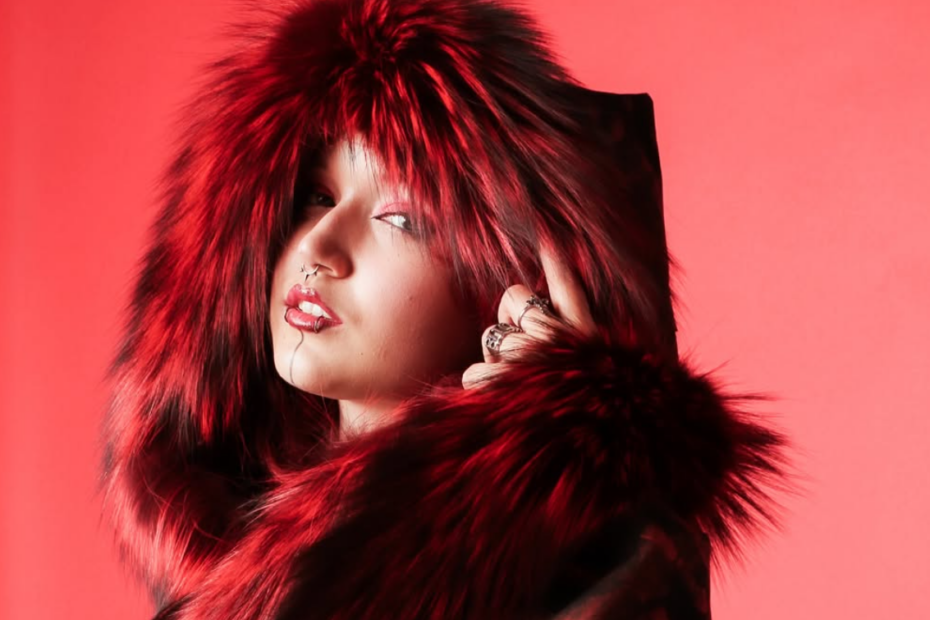
NIIVI is a two-spirit Indigenous activist and artist from Nunavik, the northern third of what is known as Quebec. They play music incorporating Inuktitut language and cultural practices in Montreal and on tour, founded Nunavik Pride, and advocate for Indigenous rights across the province.
This interview has been edited for clarity and conciseness.
Charley Tamagno for The McGill Daily (MD): In The Concordian, you mentioned that you see yourself as an activist first and artist second. What does this distinction mean to you? Would you consider music a medium for your activism?
NIIVI (N): Definitely. I think music is my number one medium for my activism. The most important thing to me is being on the ground and being hands-on involved with the community, because if you’re an activist and you’re not actually doing anything in the community, then it’s just performative.
My activism is my main job. The biggest way I’m doing that right now is teaching at a pre-collegiate CEGEP Prep Institute … I’m teaching precolonial arts and also language revitalization through arts because we have a lot of terminology for art. I work specifically with youth from Nunavik. I also work with Nunavik Pride – I’m one of the founders. My main thing really is trying to better my community through activism.
MD: Do you spend the majority of your time here in Montreal or in Nunavik?
N: I live in Montreal right now because I’m also a student, and all students from Nunavik have to move to the city to have a higher education. I moved here when I was 16 to start going to CEGEP after graduating high school.
MD: Could you tell me your story ofhow you got started with music?
N: With music, it was never really a decision. Music has always been an inherent part of me; not only me as a person, but in my culture as well, even though we’ve lost a lot of our cultural music practices. My father, Ito Snowball, is also a musician. He goes by Sinuupa. I grew up while he was on tour. And so when I was born, it was a given that I would be in music in some way. I was born with the ability to sing. I never really made the decision to actively pursue music. It was just there.
MD: How much of your time do you split between music and being a student?
N: I think, honestly, music takes up more time than me being a student because I am fully self-managed and independent. I book all my own gigs, and that definitely takes up more time than being a student.
MD: I understand that you come from a long line of artists. So who would you say are some of the biggest influences on your music?
N: I would say my father is definitely my number one influence … I listened to a lot of classic rock growing up and punk music. My dad[‘s] own songs sometimes delve into some heavier, even metal genres, and his lyrics have always been political. I think my lyrics reflect that, and I was influenced by that in my own writing style – having a very political storytelling approach. For broader influences, I would definitely say Tanya Tagaq. She is the ultimate alternative artist.. She’s a contemporary throat singer, and she’s super punk, [and] really awesome, and I got to get close to her this last year. She’s been such a big supporting factor to me, and I’ve always just really looked up to her since I was little. I would also say Beatrice Deer. She is another Inuk artist from Nunavik, I grew up with because she’s friends with my dad. I have gotten closer to her since I moved to Montreal because she lives here now. She is an incredible…multidisciplinary artist… and I would love to be her. When it comes to musical influences, I would definitely say … Ribbon Skirt [and] Ethereal Tomb.
MD: How does your experience growing up in Nunavik currently influence your songwriting and performances?
N: I think my experience as Inuk influences every aspect of my music, even when the subject matter isn’t necessarily about being Inuk, I just am Inuk. My experience influences the way that I live my life and [how] I am treated in life as well … Every single part of my music is influenced by my indigeneity. Growing up in Nunavik, my family really highlighted the importance of our history, and not only the history of our colonization … but the pre-colonial history: the art, the culture before we lost it. It really highlighted the importance of language and cultural revitalization … Always the number one priority was … the survival of our culture. And I think that reflects in my music as well.
MD: How would you say that you incorporate your culture into your music?
N: The opening song on our album is … an ancient, traditional song – it’s so old that even the Inuktitut in it is an ancient Inuktitut. I start the show in a drum circle, and I sing the song in this drum circle with the crowd, and then I run up on stage, and we all come in in the middle of the song as a band and continue it. It highlights the importance of tradition and culture, and we can honour [it] by starting every show with that. It’s only something we can do whenever we have the space to do it, because I have to be able to get on the ground and interact with people in the drum circle. Also, it jumps into a more modern aspect with the full band right in the middle of it. So, it’s highlighting the way that we can keep traditions while also being progressive.
And then also my throat singing, that’s an ancient part of our culture. It’s one of the things that has been heavily intertwined with my life because I’ve been throat singing since I was 4 years old. I learned how to throat sing before I even knew how to sing in the usual sense. I really love including throat singing in my songs, and I also think it includes a very unique part to the sound.
MD: Have you found performing in Montreal different than when you’ve been in the north?
N: I think the main difference is being in Montreal, I feel the sense of responsibility to explain. A lot of the people here don’t even know that we [Inuit] exist, even though we’re in the same province. It’s really weird to live in this disconnect because I know so much about Indigenous people and my culture and even other indigenous cultures…. You have to be educated in order to survive as an Indigenous person today. But then you come to the city and then everyone is absolutely clueless about Indigenous people, and there’s even people who don’t know that you exist, who don’t think or don’t even know that Indigenous people still exist. A lot of people think that we’re extinct because of colonization. It’s crazy, the amount of ignorance and unknowingness of the public here. When I’m in Montreal or in any city, I treat my shows as a history lesson where I explain the context of the songs in a brief way just to be able to introduce people to this concept, and maybe open their minds and their curiosity to going and learning about it.
MD: What has been your community’s response to your music?
N: There’s definitely mixed reviews. Nunavik is still extremely Christian, and there is a lot of homophobia and fear of difference – there is even a fear of our culture because we were so indoctrinated into Christianity. A lot of older Inuit still believe that our culture is the mark of Satan. A lot of older Inuit still think that practicing our culture even throat singing, is satanic. And so there are a lot of [people] that are still scared of their own culture. It’s really difficult, and it’s sad to see. Youth are getting out of that idea, but, as a teacher of youth, you can still see this ideology affects them. Shamanism is definitely the number one, most feared thing of our culture because we were taught that it was satanic and that even if you talk about it you’re going to hell. So, even youth, whenever you say the word shaman, they get scared and they freeze up and you have to reassure them: “No, it’s okay, it’s okay to talk about these things.” These things are not scary. This is part of who we are and it’s a beautiful thing. We’re still so affected by colonization [and] Christianity that we have this fear of difference, and almost this fear of ourselves. But whenever I do get support from my community — and I do have a lot of it, I do — it makes me feel as though I’m doing the right thing.
MD: How does being both queer and Indigenous show up in your work and your activism?
N: I’m two-spirit, but in a more feminine way. In my culture, being two-spirit is about carrying two spirits with you. I was given my great grandmother’s name, Jenny Snowball, to carry with me. And then I have my own spirit of Niivi. I don’t know if I’ve talked about it specifically in my music, but I definitely advocate for queer people a lot. I do a lot of activism for queer Inuit specifically because I grew up thinking that there was something wrong with me because there’s absolutely zero Inuk queer representation. The only reason why I felt like it was okay was because there was one other queer person in my community who was trans, my chosen brother … [My chosen brother and his friend] put on the first ever Pride parade in 2020, and I joined them the next year, and we helped create the Nunavik Pride organization. One of the most important things is just having that representation and being a queer Inuk that is visible in the community, because there are so many queer Inuit who think that it’s just not possible. There’s so much misinformation: whenever someone comes out as queer in our community, [people claim] it’s not traditional, and that’s just not true. That’s just Christianity speaking, and Christianity is not our culture. We’ve had Christianity for a while, but it’s not our culture. In our original culture we had space for queer people, they were in fact important members of our society. Even our creation story is one that is extremely queer.
MD: Who is in the band for NIIVI?
N: My bandmates right now: Ollie Capello. She’s the bassist. She’s amazing; she’s also the best visual artist ever. She’s a painter and that’s her main thing – she actually painted the album cover that we’re gonna use, and she’s probably the best visual artist that I know. Kirk Koshkin, our guitarist, he’s also the lead singer and guitarist of his own band called Honey, which is how I found him. Our current drummer right now is Emilio, from a Montreal band called Dollhouse, which is also another incredible band. It’s really nice to be so involved in the Montreal music scene and have this community of musicians. It’s the only way that I felt comfortable living in Montreal. When I first moved to Montreal from my hometown, I really hated it, because it felt so individualistic compared to coming from a very communitarian place.
MD: If someone were looking to delve into the world of artists from Nunavik, who would you recommend?
N: I obviously first have to say my dad, his artist name is Sinuupa. My favorite song by my dad is “Simple Man” off his Arctic Darkness album. It’s so, so 90s. And also “Make Her Happy.” That song is from the same album. It’s a musician song – there’s saxophone, flat bass, background singers – that song is just crazy.
And then I would say Beatrice Deer. My favorite album of hers is her newest one, the Inuit Legends album. I got to open for her release show that she did here in Montreal. I absolutely love it. It’s basically a bunch of songs telling the story of traditional Inuit legends and it’s incredible. Then I would also have to say my cousin, Kathy Aputirajuk – it’s our original last name before the government decided it was going to be Snowball. Those would be my main three from Nunavik that I would recommend.