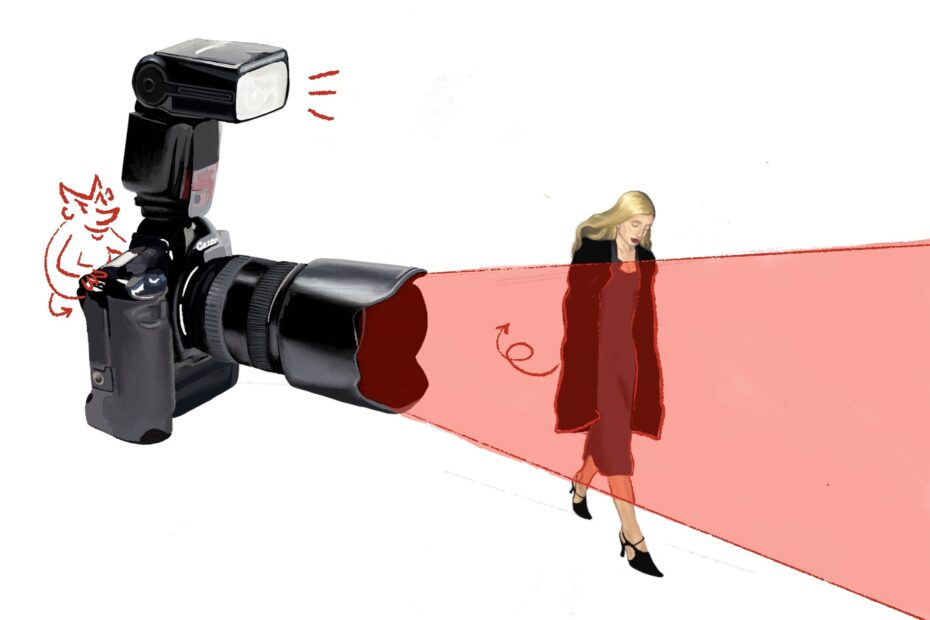
It’s Friday, July 16, 1999. A blonde woman is at a nail appointment, while paparazzi gather outside the salon. Incessantly snapping pictures, they call out her name. Her nails have been painted a vibrant red, but she second-guesses the decision, asking the beautician for something safer: a nude shade. Sunglasses on, she leaves, swarmed by shouts and camera flashes. This is Carolyn Bessette-Kennedy on the last day of her life.
The above vignette forms the opening scene from Love Story: John F. Kennedy Jr. & Carolyn Bessette, FX’s newest show that has quickly become a sensation. Speaking to the public’s enduring infatuation with the couple, it is now the platform’s most watched limited series to date, just a month after its release. The limited series tells the story of America’s reluctant “it couple” of the 1990s. Love Story curates the details of Kennedy Jr. and Bessette’s notoriously guarded relationship. Drawing from friends’ anecdotes and media footage we see Bessette fitting Kennedy Jr. for a suit in the Calvin Klein show room, to a proposal on a boat at Martha’s Vineyard, or a fight in Battery Park where Kennedy Jr. pulled off Bessette’s ring. This collage of moments is depicted in the show, with certain shots taking on the grainy quality and square framing of a ’90s era camera, making the restaging obvious of a moment captured by the press. Other production choices appeal to cultural memory, such as the costuming. The show’s crew went to pains to source archival pieces from Yohji Yamamoto and specific items like a green Valentino coat to evoke the image of Besette’s looks, as seen in paparazzi images.
With the series’ clever blending of fiction and reality, it’s easy to believe the iconic couple’s real relationship is finally being revealed. The chemistry between the two leads (Sarah Pidgeon and Paul Anthony Kelly), close-up shots, warm lighting, and the “behind closed doors” setting develops a captivating intimacy. After watching the first few episodes of the show, I had a feeling of hollowness I couldn’t place. Only to discover, I was mourning the couple’s death, over 25 years later.
The intense public investment which Love Story depends on and re-evokes was significant to Kennedy Jr. and Bessette’s relationship. The public’s adoration and collective grief for his father as well as a life in front of the cameras made John F. Kennedy Jr. America’s son, as well as its most coveted bachelor. Any woman Kennedy Jr. dated was held to high standards by the public. The same went for Bessette, who was put under intense scrutiny by the media. She had claimed the man who belonged to America, and these were the consequences.
Having never been in the public eye, Carolyn Bessette was different from all of the women Kennedy Jr. had previously dated. When the show begins, Kennedy Jr. is still dating actress Daryl Hannah. Hannah is adept at handling the paparazzi, as she poses for a few good pictures to get them to go away. This juxtaposes Bessette, who refuses to give any of herself away to the media. She’s the perfect enigma. Her style is the epitome of minimalism. There are only two clips of her voice that circulate online, each under two seconds long. Her attitude defied the public’s insistence on a stake in her relationship. The tabloids called her an “ice queen.”
As the couple’s relationship got more serious, so too did the American public’s investment. In Love Story, Bessette and Kennedy Jr. are swarmed and harassed by reporters who block the entrance to their apartment upon their return from their honeymoon. A few days later, the couple’s car is climbed on and surrounded by photographers, making them unable to drive away. More and more tabloids speculate about Bessette, commonly circulating rumours about a pregnancy based on her appearance. As a result of the intense media attention on the couple, the scope of Bessette’s world becomes smaller. She quit her job as publicist at Calvin Klein, and began to limit public appearances. Love Story imagines the press as anxiety-inducing for Bessette, with close-up shots of her fidgeting hands and slowed camera flashes across her worried face.
This is referenced in the show’s opening. Bessette is first seen being hounded by the media and nervously conforming her appearance to their expectations. Meanwhile, Kennedy Jr. is introduced on his way out of the offices of his magazine George. In contrast to Bessette, he confidently strides down the halls, undisturbed; followed only by his assistant. This immediately establishes the couple’s differing relationship with the media, showing it as particularly crippling for Bessette.
The aggression of the media in Love Story is particularly striking. In another scene, Bessette is pushed into a car door by a mob of reporters. If this is how Love Story sees the American media of the ’90s, then how does it see itself? This is a fine line for the show to walk. The vicious portrayal of the media invites recognition of Love Story itself as equally aggressive and intrusive. Not to mention, with questionable ethics. Despite providing narrative form and an empathetic lens, the show can be deemed as no less invasive than the ’90s tabloids it scrutinizes.
Love Story dramatizes the inner lives of a couple who were notoriously private, undoubtedly adding to the appeal. Its main character is Carolyn Bessette, a woman who never gave a public interview. However, the show often aligns the viewer with Bessette to develop pathos, focusing on her hesitation and nerves as she meets the Kennedy family and faces the paparazzi for the first time. Viewers are invited to identify with Bessette’s position as an outsider to the life of America’s royalty. “They feel like they know us,” says Jackie Kennedy in the show. Her and Kennedy Jr. sit in her apartment, reflecting on their relationship with the American public. Her statement is immediately uncanny, the show’s staging of this intimate conversation giving it a self-reflexive resonance.
A similar moment speaks to me. In the show’s seventh episode, “Obsession”, Bessette opens up to Kennedy Jr. about her struggles with media attention, admitting that it was much harder to handle than she had thought. Overcome with heaving sobs in Kennedy Jr.’s arms, Bessette relinquishes her strong exterior. It is one of the most heart-breaking and vulnerable moments of the show. As their apartment buzzer sounds, she cries out: “They won’t leave us alone.”