On a snowy Wednesday evening, I entered the comforting warmth of MAI (Montréal, arts interculturels) for the world premiere of ii.FTG, a dance experience created by Mara Dupas, Athena Lucie Assamba, and Aurélie Ann Figaro. I had the pleasure of speaking to Dupas, Assamba, and Figaro before their first performance to learn more about what ii.FTG meant for and to them. All three are multidisciplinary artists, celebrating art’s unbound, multiple forms. Dupas is the choreographer and artistic director of ii.FTG, while Figaro and Assamba are the dynamic dance duo of the show.
ii.FTG is certainly a labour of love. The process of creating the show, Figaro told me, started “about two years ago,” with all three of the performers involved in it “since day one.”
“The work started out of the studio,” Figaro said, “with a process of building playlists, listening to playlists, [and] paying attention to music videos.” With Djeff Jean-Philippe (stage name: DJ Chef Jeff) seamlessly mixing live during the dance performance, music is the heart and soul of ii.FTG. Figaro mentioned a “writing workshop” that the three artists partook in before the creation process, with “discussions about lineage, heritage, and also how male artists rap about women.” From this, ii.FTG started to take shape.
Key inspirations for the show, Dupas stated, are “Francophone rap” and “Afrobeats”. The influence of both genres shines through both visually, in the piece’s costumes and lighting, and in the dancers’ movements.
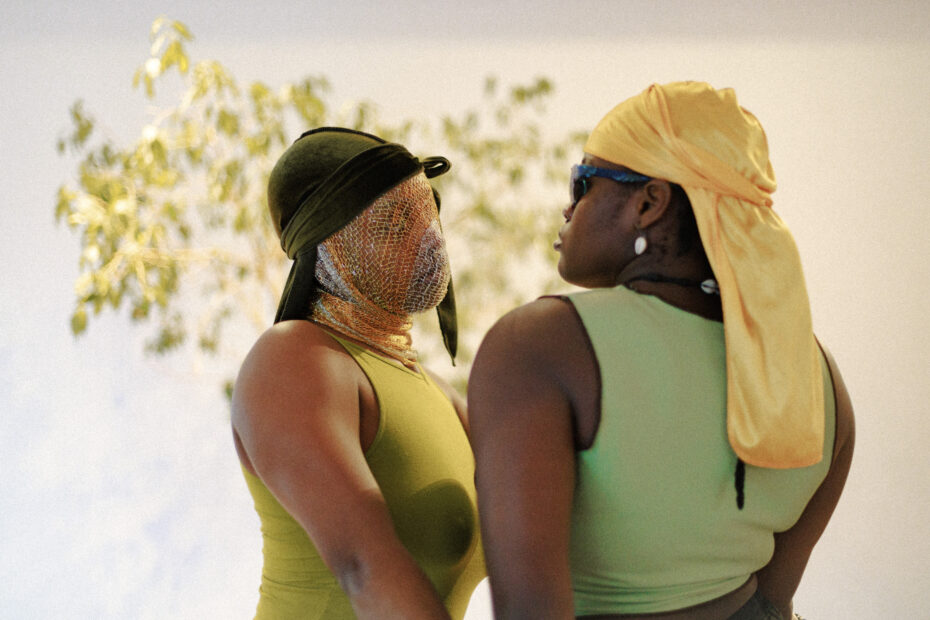
When I arrived at the performance space, MAI exuded a friendly, welcoming atmosphere. As people took off their snow boots and entered the space, there was a collective sense of the outside world slipping away. What followed was certainly an immersive experience. Assamba sat on a stool by the entrance, completely still, while Figaro, clad in an iridescent hoodie with her face covered, moved around the stage, at times coming up close to the audience. With seating on both sides of the room, the audience encircled and became submerged in the movements of the duo in the center.
The show opened dramatically, with Assamba entering and giving the audience an arresting stare. The music started slowly, with Assamba and Figaro’s natural, intimate movements exuding a palpable connection between them. The dancers, Dupas described, work “within systems of improvisation” – each night is different, but the performers always work from the ideas they built together in the studio.
The costumes were inspired by music videos, with links to “Aurélie and Athena’s personal styles,” Dupas tells me – a testament to “club settings where you’re not wearing ‘dance clothing,’ but just clothing that makes you feel good.” With two costume changes in an hour-long performance, the space became metamorphic. After Figaro’s chrysalis-like removal of her hoodie revealed her mouth to be taped shut, her next costume included a reflective mesh over her face, portraying thematic “opacity” that Dupas worked with to exemplify how the audience can never fully see into the dancers’ worlds.
Over the course of the experience, the lighting moved from darkness, with long, dramatic shadows and silhouettes, to spotlights, to strobe effects, melding smoothly with the range of reverb, echo, and looping in the show’s auditory landscape. At times, DJ Chef Jeff was illuminated at his decks, blurring the lines between music and dance throughout the performance.
The show ended with a club-like finale and salsa-esque moves between Figaro and Assamba. As the lights came on, there was a grin on every audience member’s face, myself included.
ii.FTG is more than a dance show. To Dupas, there is always a “dialogue” between music and dance – “there are moments where some of the gestures will inspire the music, the glitching, and some other times where it’s really the music taking over.” With DJ Chef Jeff’s dance background, the two forms melded naturally together.
For Assamba, ii.FTG shows how “song can become a world in itself,” with each number telling its own personal story through the duo’s physicality. For Figaro, it was like “inviting people to my personal listening party.” In fact, DJ Chef Jeff’s mix was inspired by a playlist created by Dupas and Figaro, transforming ii.FTG into a uniquely personal space.
‘FTG’ has an open meaning: ‘For The Girls,’ ‘For The Gays,’ and ‘Ferme Ta Gueule’ (trad. ‘shut up’) are some of the many interpretations of the title, reflecting the fluidity of meaning that ii.FTG offers.
I asked what advice the artists would give to anyone in Montreal hoping to pursue a creative career. For Assamba, it’s important to be your “authentic self.” For Figaro, it’s about “connecting with community, but also staying humble and curious.” For Dupas, it’s to “trust what you love geeking about.”
ii.FTG truly felt like a work of passion and collaboration. I was privileged to have been able to share time and space with such original artists who truly enjoyed and believed in what they were putting out into the world.