

Content warning: misogyny, violence, and death
In 2025, Netflix released psychological crime drama Adolescence, a British TV series that would change the way we think about the manosphere, online incel culture, and its implications on contemporary misogyny. The story, set in South Yorkshire, follows the arrest of a 13-year- old boy on suspicion of murdering his female classmate after she rejected his romantic advances. Each episode is shot in one take, inviting us into the story in its entirety; every moment of silence, every improvised line, every facial expression brings us closer to the feeling that we are there in the room, with those characters — whether we like it or not.
The story of Adolescence did not come from nowhere. Rather, it was a response to the frequent cases of gender-related knife crimes occurring in the United Kingdom. This included the murder of Ava White, a 12-year- old girl in Liverpool who was stabbed by her 14-year-old schoolmate Harry Gilbertson following an argument over a Snapchat video. He was given a minimum sentence of 13 years, while the three other boys involved in the incident were released without charge. Elianne Andam, a fifteen-year- old student from Croydon, London, who aspired to be a human rights lawyer, was stabbed to death by her friend’s seventeen-year-old ex- boyfriend during the couple’s breakup . Noticing these cases, Adolescence screenwriter Stephen Graham wanted to find out what was behind this terrifying “male rage” responsible for the deaths of innocent young girls, remarking “this kind of thing didn’t happen when I was a young lad.”
Surprisingly, the term “incel” (short for “involuntary celibate”) was actually coined by a female university student in Toronto who wanted to create a community for people who had difficulty forming romantic or sexual relationships. Her website, Alana’s Involuntary Celibacy Project, was founded in 1997 and was open to people of all genders and sexual orientations. As her own dating life improved, she stopped maintaining the website and passed it on to someone else. It was only in the mid-2000s that the “incel” discourse came to be dominated by men. Men who felt resentful about their lack of romantic and sexual experience and who chose to displace the blame onto women. Following the tragic Isla Vista attacks of 2014, in which 22-year-old Elliot Rodger murdered six people in the vicinity of a sorority house to “punish” all women for rejecting him, the creator of the “incel” term expressed regret for the way her project had become tragically misinterpreted. She compared herself to “a scientist who invented something that ended up [becoming] a weapon of war.”
Later in the 2000s, incel communities thrived on online platforms like Reddit, 4chan, 8chan, and Gab. They also turned to the dark web for their more insidious communications which included planning and promoting gender-related murders and attacks. Today, popular online figures within the manosphere movement include Andrew Tate, Sneako, Clavicular and Vox Day, as well as anti-feminist women like Hannah Pearl Davis, who claims that divorce should be banned and that men have the “right” to watch porn if they don’t want their marriages to fail. Violence linked to incel culture and the manosphere h a s killed as many as 50 people in the US and Canada, and more in the UK and Germany. In Canada, the first time that a court made a finding of incel-motivated terrorist activity was in 2023, following 17-year-old Oguzhan Sert’s brutal murder of a female receptionist in 2020. He had written a note reading “Long Live The Incel Rebellion” prior to the attack and used abusive language during the murder, calling the woman a “whore” and repeating “die, die, die.”
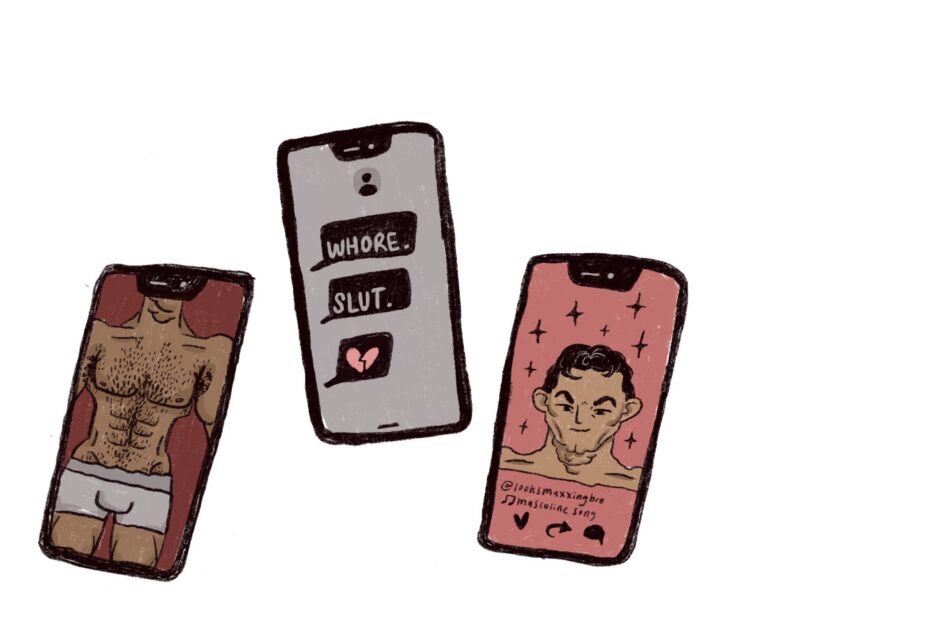
McGill University students who were interviewed on the topic in my own investigation expressed mixed knowledge about such incidents; 100 per cent of women interviewed were aware of both incel culture and cases of incel-related violence, compared to only 60 per cent of male interviewees. One male student noted the existence of different types of incel figures online, including “looksmaxxers” who encourage young men to undergo unsafe cosmetic procedures or take steroids as a measure to attract women. Most students attributed the rise of these cases to online trends and cultures. However, students also acknowledged that whilst this particular form of misogyny is relatively new, extreme incidences of gender-based violence, femicide and misogynistic ideologies have been around since the beginning of time. A particularly poignant example is the École Polytechnique massacre of 1989, in which fourteen women were shot in a savage anti-feminist attack. Perhaps what is most shocking is the return of such heinous instances during an age of supposed progressivism. When asked if they view these cases as a personal threat to themselves, 100 per cent of female students said yes, while 100 per cent of male students said no. One male student stated “I’ve never read an article in the news and thought, ‘this is a personal threat to me.’”
Recognizing these cases as nothing short of wicked and pernicious acts of violence against young girls and women, and treating them as such in court and beyond, is essential to combatting the normalization of incel culture. Former UK Prime Minister Keir Starmer praised the Adolescence series, welcoming Netflix’s initiative to make the drama available for free screening in secondary schools and in parliament. The UK has incorporated potential incel radicalization into its national counter-extremist monitoring program, “Prevent,” but has not yet categorized severe incel attacks as terrorism (the UK’s Independent Reviewer of Terrorism Legislation concluded that its current legal definition of terrorism is broad enough without needing a new category specifically targeting incel-related attacks.) Meanwhile, Canadian authorities have prosecuted incel-linked attacks, such as the Oguzhan Sert case, under terrorism legislation, and Public Safety Canada announced over $25 million in funding to deal with radicalisation and incel- related violence. The US government recognizes incel extremism as a single-issue motivator to terrorism, but has historically treated cases as hate crimes rather than terrorism. Legally, then, Canada has taken the most steps toward treating incel- motivated violence as the destructive and harmful crime it is.
It is one thing to enforce legal consequences for incel-related violence, and another to prevent it in the first place. In this respect, the UK has taken the most effective measures in implementing anti- radicalization measures into its national curriculum. Schools are mandated to teach students about incel culture, as well as the links between pornography and misogyny and what constitute positive conceptions of both femininity and masculinity. Canada and the US, meanwhile, lack national equivalents, and responses tend to be fragmented across provinces and states. NGO White Ribbon offers free online training for teachers in Canada, but this alone is not sufficient. As one McGill interviewee said in my investigation, sexist and misogynistic tendencies “sadly start young,” making proper education and the prevention of these ideologies in the classroom crucial. Of course, any number of factors can contribute to harmful ideologies, from a particularly influential older brother to a humiliating romantic rejection. But the influence of the environment in which children spend at least six hours a day in must not be understated.
Spreading wider awareness, implementing effective prevention mechanisms, and passing strict legislation and proper online regulation are all steps governments must take to deal with this relatively new phenomena. These girls and women, many of them students, had futures full of possibility. Yet they were made victims of brutal misogynistic murder for the crime of their very existence. They should be remembered and honoured through real efforts at change.