

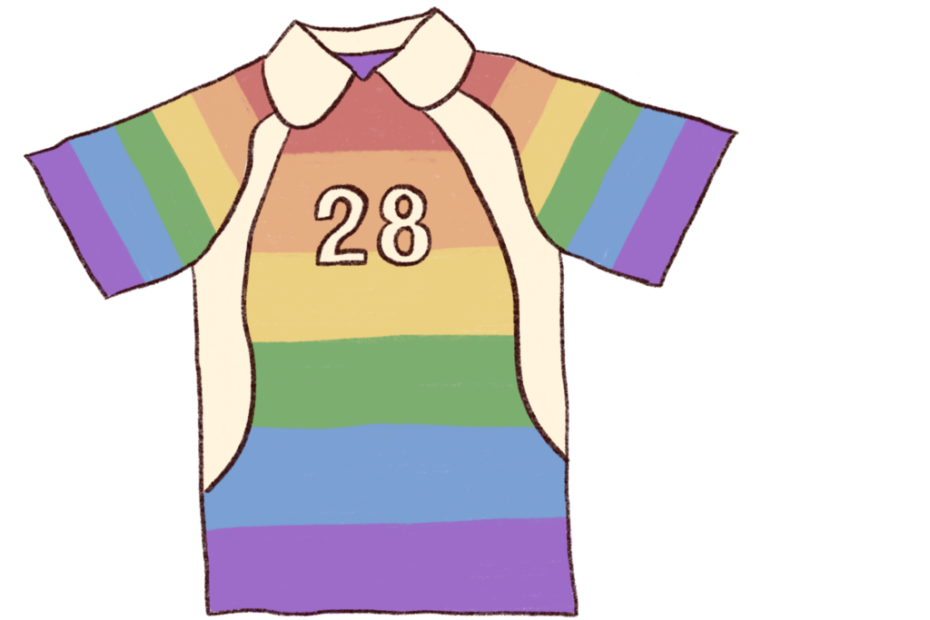
On Saturday, October 18, the McGill Martlets women’s soccer team hosted a Pride Game at the Percival Molson Memorial Stadium. They used their home match to celebrate inclusion, making the case that sports should be a safe space for everyone. McGill has long presented itself as an open and inclusive institution, and in many ways it is. Nonetheless, institutional commitments only go so far. This Pride Game served as a reminder that the push for inclusion also comes from the students.
The Pride initiative originated from Poppy Honeybone, the forward midfielder of the team, who felt as though a Pride Game was essential for celebrating and welcoming everyone in sports. Her teammate, Norah Ripple, said the team mobilizes behind causes that matter to its players. In the past month alone, they have also hosted a Truth and Reconciliation Game, as well as a Pink Game to raise funds for breast cancer.
For the Pride Game on October 18, the Martlets also launched a campaign to support the GRIS-Montreal charity, which seeks to educate people on sexual and gender diversity in Montreal. Keeping the campaign local was a deliberate choice: the players wanted to make an impact that could be seen in their own community. Poppy expresses hope that the initiative would encourage other teams–across Montreal and Canada–to form similar partnerships with queer organizations in their areas.
This season, the Martlets were the only McGill varsity team to host a Pride match. The team encourages other McGill athletes to follow suit and overtly support causes that matter to them. As varsity athletes, players on the team have a public platform, which they have used to support causes beyond the field.
The Martlets’ initiative marks a parallel with Canadian soccer leagues as well. Unlike the men’s national soccer team, the Canadian women’s national team actively hosts annual Pride celebration matches, in which players wear Pride-themed jerseys, an initiative that originates at the institutional level. Canada Soccer, the official governing body for Canadian soccer, initiated this tradition in 2023. In men’s soccer, by contrast, Pride campaigns typically depend on individual clubs’ choice to participate. Moreover, major international competitions such as the men’s FIFA World Cup impose strict regulations on kit design and on-field displays, which limit the use of rainbow-coloured jerseys and similar symbols.
As members of the McGill Martlets noted, advocacy is easier when it is shared across a team: players are more willing to speak up when they know they have their teammates’ support. The Martlets have fostered such an inclusive environment in which players feel comfortable to be themselves, and the team has thus used its games to raise awareness of causes its players care about.