
Montreal has no shortage of good cinemas, and certainly no shortage of good cinema programming. On any given weekend, you can expect at least one classic, one cult film, and one small-budget indie and/or one francophone gem on top of all the mainstream listings, beckoning you into one of the city’s many theatres. A lot of thought goes into this tempting programming, of course. Perhaps nowhere is this more true than at Queer Cinema Club (QCC) Montreal, who will celebrate two-and-a-half years of bringing LGBTQ+-focused screenings to the city’s audiences come November.
Inspired by his friend Peter Knegt of QCC Toronto, founder Jeremie Romain has been running QCC Montreal since May 2024. The club first screened at the one-room Cinema Moderne in the Mile End before moving to the bigger Cinema du Parc as of November 2025. “I wanted to start something especially for queer cinema,” he explains in an interview with the Daily. “In Toronto, there’s a bunch of different organizations that do screenings, but here, it’s kinda just us.”
While programming has in the past included more contemporary titles, such as Mysterious Skin (2004) and 120 BPM (2017), Romain’s main focus for QCC is the history of queerness on screen. “It’s kind of a queer history course, if you will,” he says, “it’s about showing the firsts. [For example,] the first time a character was a known lesbian in a movie, and [was labelled as such].” Although, not everything is about overt queerness as history has not always welcomed an openly queer character on screen, of course. Romain is therefore equally interested in screening films with what he calls queer “sensibilities.” “When you look into it, and you read about the history of the people making movies, you can find out who was queer… and how [that] impacted their work.”
Equally, Romain admits that some representation has not aged well. “In a lot of stuff from the eighties and nineties, the representation is kind of problematic… but it was the first [of its kind] and it was groundbreaking at that time.” It is still “very important,” Romain thus believes, in showing “the history throughout the decades, [and] how stuff changed.”
Genre and tone must also be considered. “I like dramas and intense stuff,” he says, but admits that he’s consciously trying to strike a balance for QCC’s 2027 programming. He has more comedies planned for the upcoming year, for example. “I think the community, at least in Montreal, responds more to [comedies], and it’s just more fun for people… but I still think we need some of the dark [stuff] once in a while, to show the history.” Romain seems to have a quota of sorts to keep his selections varied. “I love to program at least one documentary, at least one film in black and white…not, obviously, all American movies, he explains. “But there’s only twelve months in the year. I can’t hit everything, but I try to diversify [as much as] I can.”
Next month’s screening of Pee Wee’s Big Adventure (1985) is both a nod to this comedy-loving audience Romain speaks of, and a choice of personal significance. “[Pee Wee Herman] is kind of the person who raised me,” he shares. “I watched those movies over and over again.” The film, he explains further, is an example of these aforementioned “sensibilities” which queer artists lend to their work. “The character [of Pee Wee Herman] isn’t queer,” explains Romain, “but the actor is… [and he has] a humour and a way of moving that I resonated with as a kid.”
It goes without saying that art and representation go, and have always gone, hand in hand, but Romain sees cinema as particularly well-suited to queer visibility and storytelling. “In terms of art and culture, I think cinema is kinda the thing where you can see yourself represented. For me, when I was growing up, [film] was my portal to culture. I’m from a really small town and that’s how… I saw that other types of people were out there.”
On the whole, Romain says that the reception to QCC has been positive. “When I started the club, I got so many messages, and everyone would [tell] me at the events, ‘Thank you so much for starting this, this was missing in Montreal.’” While the typical showing is a relatively low-key affair, QCC screenings have in the past featured live performances and Q&A sessions with the local queer community. A screening of Paris Is Burning (1990), for instance, included conversation with members of the Montreal ballroom scene. Romain also speaks highly of the audiences, who, apparently, sometimes hold discussions amongst themselves afterwards. “I always ask [if anyone] has seen this movie before, and it’s always fun when basically no one has seen it. That means they’re gonna be excited to talk about it after.”
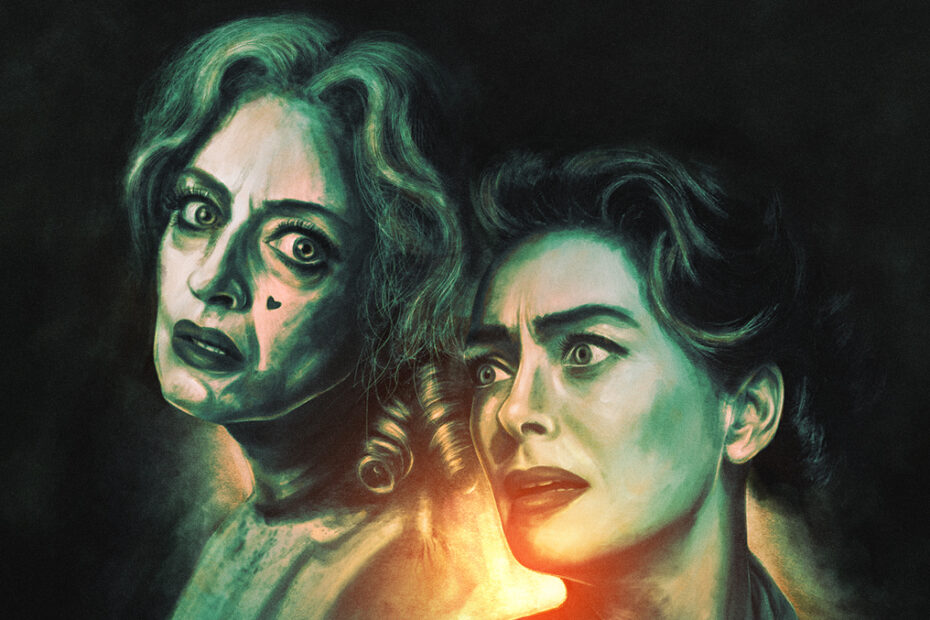
Romain is also keen to highlight the posters present at all QCC screenings. Using his limited funding — a “small donation ever month” from Festival Image+Nation — each film features an exclusive artist- commissioned, custom-made poster. “I try to pick artists [where] I see something [in their art] that could resonate with the movie I’m trying to book, and it always surprises me how well they turn out.” The posters are then sold at the screenings as a souvenir. “I like that there’s little pieces of this club that…live on elsewhere”.
This month, QCC is celebrating Halloween with a screening of the black-and-white horror cult classic What Ever Happened to Baby Jane (1962). At the time of writing, 41 of 133 seats remain available. For now, Romain seems proud of the club, but is open to future growth. “I do still feel, even almost three years in, that there are a lot of people who don’t know about the Queer Cinema Club that would probably enjoy it. We’re not as known as we could be, slash should be.”
Whatever Happened to Baby Jane plays Thursday, October 29, 9pm at Cinema du Parc. You can find all of the upcoming QCC programming on their Instagram, @qccmtl.