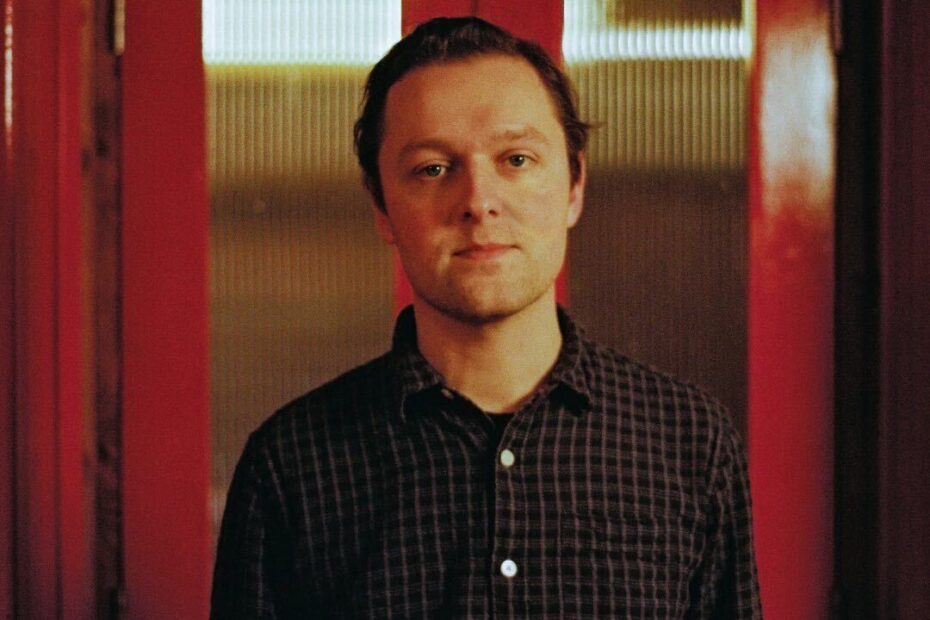
“It’s fun to try and lose a few fans,” Joshua Burnside proclaims to Radio TinTin with a big grin, as we’re sitting in the shade of a tree at the Vancouver Folk Festival. With over 118 thousand followers and 115 million streams across platforms, the Belfast native is no stranger to cultivating fandom. Still, in a time where algorithmic attention is so coveted, it is hard to believe that he truly enjoys losing listeners.
Burnside elaborates: “It’s exciting — like with my favourite artists, every time they release a new record, I wanna be like ‘What?’” — his face contorts with a mixture of confusion and disgust — “I want to ask myself, ‘What is this?… They must’ve lost their minds.”
As Burnside alludes to, artists pushing the limits of their musical experimentation can often come at the cost of losing fans. The Strokes are one notable example, having recently altered their sound against the expectations of many of their listeners. Their latest album, Reality Awaits, released in late July, provoked mixed reactions from critics and fans alike. In addition to being touted as the “auto-tune” album, it features a prominent diss to popular music critic Anthony Fantano in the song “Lonely in the Future.” Reality Awaits has achieved an undeniable prominence in the Strokes’ discography — one that can be seen as either a jarring break or a welcome breath of fresh air from the rest of their work depending on the individual listener.
“Every songwriter I know is always trying to challenge and push themselves, some more than others,” says Burnside, “but it’s rare to meet anyone who wants to do the same thing over and over again”.
The reactions of fans, whether positive or negative, can be used as a gauge by artists to test whether they are pushing the boundaries of their own musical landscape to a sufficient extent. While Burnside himself hasn’t been tinkering with the wonders of auto-tune, he has been experimenting with a different emotional palette. His latest record, titled It’s Not Going to be Okay, marks a morbid turn from the more wistful, subdued tone of the rest of his catalogue. Written and recorded in the wake of the death of his best friend, Dean Jendoubi, Burnside used the project to process his grief. Centering an entire record around mortality marked a new direction for Burnside, one he deems significant to
his artistic development.
“You know…you understand how music works after a while, and how melodies and emotions intertwine. Music is like magic, isn’t it? It’s just like trickery. You’re tricking someone’s brain into feeling certain emotions with melodies and chords. But you have to kind of go, ‘Okay, don’t do that. You’ve done that before, or you’ve heard that before. Do try and do something else.’”
Making music that deviates from the norm is a deliberate craft. Commercial success in the music industry can often be crafted from a set of predetermined components that have been shown to work. There are identical melodies in hundreds of songs topping the charts (such as the pervasive “Gen Alpha melody”).
After more than a decade of releasing music, Burnside knows the “formulas” for gaining an audience. “You know all the tricks. You can do all the nice stuff, but you don’t. [In] so much music I listen to, you’re expecting this particular melody, [but] they went the other way even though it’s not as nice. It’s not as ‘done,’” he explains. “They chose to do the sort of grosser thing. And you’re like, ‘ah…I respect it.’ And then you grow to love it.”
In order to be appreciated, music relies on the interaction between the artist and listener, meaning that to some extent artists have to balance taking creative risks with maintaining a universality of appeal to the audience. For Burnside, that conflict is constant in his creative process.
“It’s so hard, when you’re making the music, to choose those paths sometimes. You’re like, ‘if I land on the four [chord] here and do this melody, it’d be really tasty…’ but it’s probably [already] been done. It’s hard to choose the path less taken,” he concedes.
Later, Burnside used the age-old adage “with great power comes great responsibility.” Artists like him maintain the cultural core of our society, wielding their craft to shape people’s everyday emotions. With the current state of our society making it increasingly enticing for people to retreat into the comfort of media and art, artists must continue exercising their creative influence in a meaningful way. Joshua Burnside, for one, keeps us wondering what he’s going to take on next — and how he is going to continue challenging his devoted fanbase, who for now seems to have withstood his attempts to drive them away.