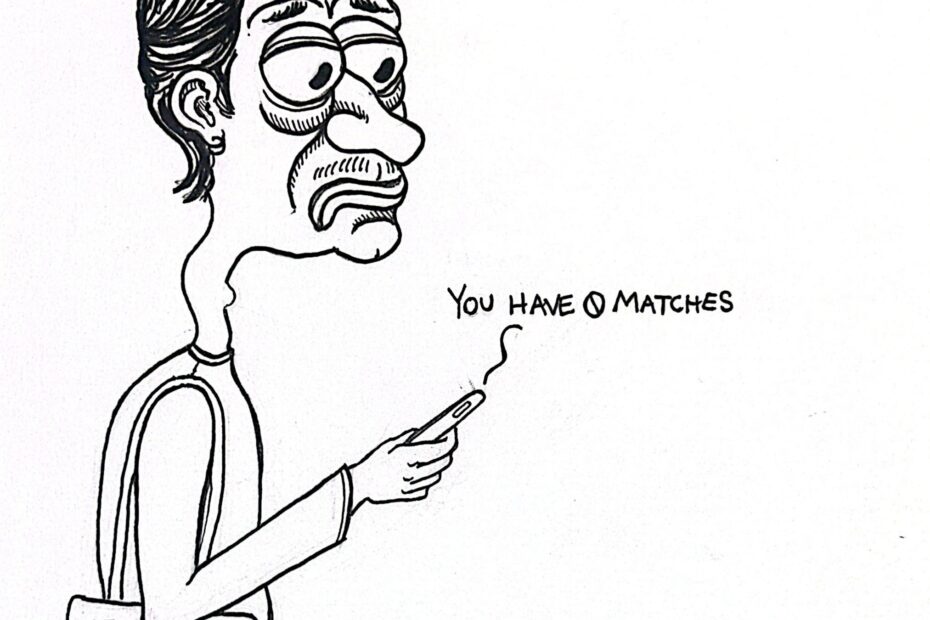
Every February 14, people partake in the same frivolous routine: buy flowers; book the overpriced dinner; or, if they’re single, brace for the annual reminder that they are alone and quietly wonder if they have failed at adulthood. Though the contemporary holiday was initially designed to celebrate love, Valentine’s Day has become oversaturated with social expectations – how to celebrate “properly,” gift-giving, or even performative posts on social media – that often leave single people feeling left out.
The irony is that, worldwide, fewer people are in relationships compared to the previous century. Since 2010, the number of people living alone has risen in 26 out of 30 wealthy countries. In the United States, the share of 25 to 34-year-olds living without a partner has doubled over the past 50 years. More and more people across Asia are choosing not to marry, and each new European generation is less likely to be married or living with a partner than the last generation at the same age. The Economist is calling this phenomenon the “great relationship recession.” This label makes it sound as if romance is collapsing, when what’s actually collapsing is the centuries-old convention that successful adulthood, and especially womanhood, must entail romantic relationships.
For most of history, romantic relationships weren’t merely a norm. They were also an economic necessity, especially for women. Marriage was pitched as security, status, and social legitimacy, safeguarding a woman’s “place” in society. If unmarried, women were called “spinsters,” a word which carried a misogynistic aftertaste in its pronouncing of a woman’s failure in life. While we may have retired the term, we have not yet retired the logic. Even today, as Vogue writer Chanté Joseph puts it, there’s still “boyfriend land:” a world where women’s identities are centered around their partners’ lives in a way that’s rarely reversed.
However, Joseph also affirms that “being partnered doesn’t affirm your womanhood anymore.” Women have many other claims to success: degrees, jobs, confidence, creativity and knowledge, to name a few. In spite of the historical pressure to marry, rising chosen singlehood isn’t automatically a crisis. Rather, it can read as one of the most significant forms of female emancipation in the last half century.
For some, this shift is evidence of women’s admirable self-reliance and the reclaiming of their lives. As women’s career prospects have improved, their financial dependence on partners has decreased. Being able to support themselves means they’re less likely to tolerate “inadequate or abusive” relationships. In fact, The Economist suggests that a multitude of women have been liberated from unhappy unions and that men must now treat their partners better if they want to stay together. In that sense, the story isn’t about dying romance, but rather about gendered emancipation.
Additionally, heterosexual relationship terms are being renegotiated. As living alone becomes more viable, women’s standards become more exacting – partly because increasing divorce trends taught people to think carefully about what they want and who they want it with, as SFU researcher Yuthika Girme notes. A mediocre partner is no longer a better bet than remaining single. For instance, many women prioritize education and financial stability in a partner. Yet, at the same time, men have gradually dropped behind women academically. Men are therefore incentivized to meet “this moving bar,” pushing domestic labour and childcare toward a more equal split across genders. For many, growing female autonomy and loosening gender roles is a genuine win.
However, if being single is so freeing, why does it often feel so bleak? Surveys across countries suggest that 60 to 73 per cent of single people would rather be in a relationship than single. A 2019 U.S. poll found that “although 50 per cent of singles were not actively looking for a partner, only 27 per cent said this was because they enjoyed being single.” Essentially, there’s a rising number of people yearning for love but stuck in a dating market failure preventing compatible people from finding one another. Worse still, the timing of this failure is brutal as we are in the midst of a so-called “loneliness epidemic.” Researchers within Harvard School of Education found a strong correlation between loneliness and mental health: reports of anxiety or depression were far higher among lonely adults (81 per cent) than among those who were less lonely (29 per cent).
Yet, “single” is not a synonym for “lonely” – and treating it that way is part of the problem. Stigma- entrenched couple-centered thinking, i.e. the assumption that being coupled up is the default and ideal way to live, has declined. However, single people are stigmatized as being “in between” their real lives, expected to, by midlife, “come to terms with being single.” Family gatherings still come with the expected question: “Are you seeing anyone?” This might sound innocuous, but it actually implies partnership is the ultimate goal. It also undermines the fact that, across representative samples – even including those who very much wish they were coupled – single people are often happy with their relationship status Many thriving singles savour solitude as an opportunity for freedom, reflection, productivity, and personal growth. For them, the discomfort isn’t the status of singlehood itself. Rather, it’s these social interactions that manufacture the insecurity they then claims to pity that threatens the happiness of single people.
Ultimately, if people want a romantic connection but can’t find it, what’s going wrong? By 2013, meeting online became the most common way couples formed, restructuring the relationship “market.” For one thing, social media sells relationships as perfect fairytales, producing unrealistic expectations. For another, dating apps foster excessive pickiness. Take Bumble, many women using the app to rule out men under six feet tall, eliminating roughly 85 per cent of potential matches. Social media has also made political identity inseparable from compatibility. The gendered polarization pushing men and women further apart – with the former leaning conservative and the latter leaning more liberal – turns politics into a deal-breaker. Take the 2024 US presidential campaign: women favoured Kamala Harris while Donald Trump benefited from a 10-point advantage among men.
Then there is the social atrophy issue. Americans, young and old alike, now meet up in person less often than they used to. Though COVID-19 wasn’t the initial root of the issue, it certainly accelerated it. Stanford sociologist Michael Rosenfeld estimates that the pandemic-related reduction in dating pushed the number of singles in the US 13.7 million higher in 2022 than it would have been had 2017 singlehood levels held steady.
Some argue this erosion of in- person social life is indicative of “social and moral decay,” particularly as artificial intelligence (AI) grows more sophisticated and increasing numbers of people turn to it for intimate relationships. Surprisingly, seven per cent of young singles say they would consider a robo-romance with an AI companion. After all, AI does not ask you to clean the bathroom or get a better job.
Still, the real scandal isn’t that some people would rather date a bot; it is that, in a couple- centered world, singlehood comes with economic and social penalties. Even as stigma decreases, there can be a price to independence, and it is called the “singles tax” – the extra cost of living that falls on people who can’t split rent, bills, or groceries with a partner. While unattached New Yorkers may save on the costs of an expensive Valentine’s Day date, they’re paying a much higher – the highest worldwide in fact – “singles” tax to live by themselves. Living alone in New York City costs $19,500 (USD) more per year than living with a partner, not to mention inflation. In Toronto, the singles tax was nearly $15,000 (CAD) in 2023 based on one-bedroom rents. On the other hand, married or common-law couples can receive a spousal credit, pool medical expenses and split pensions with their partners, if eligible. As Queen’s University professor Elaine Power warns, “poverty rates for people living alone are ‘significantly higher’ than the general population.”
Overall, where being single was once a cautionary tale, it is now slowly becoming a desirable and coveted status. While some believe this “great relationship recession” might reflect social decay and loneliness, being single also reflects liberation from outdated expectations built on misogynistic assumptions. Yet, given the entrenched societal and economic barriers linked to singlehood, its rise might just be a trend. Only time will tell.