Apathy and psychological exhaustion in the face of short-form content
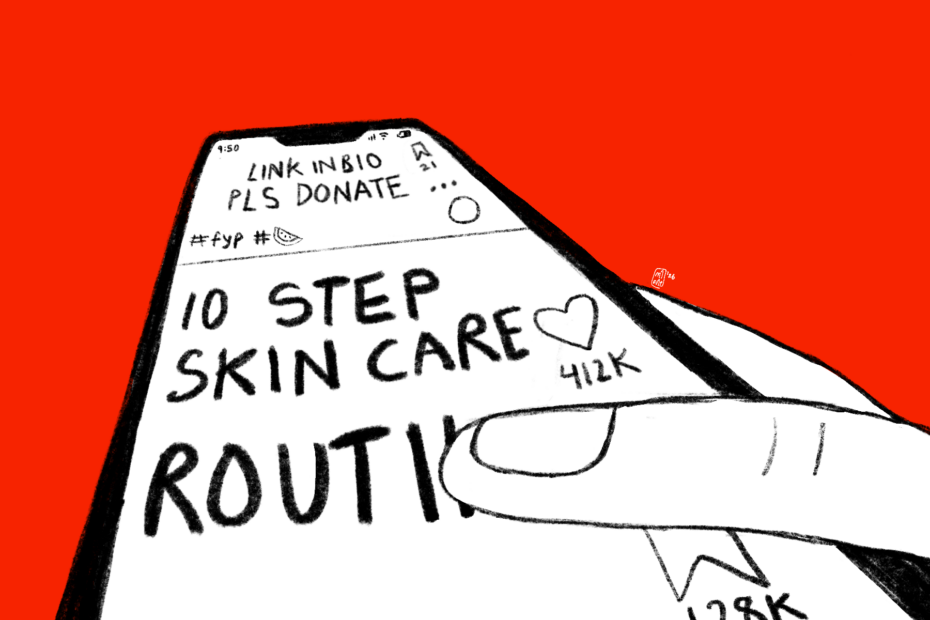
One moment, an influencer is showing their skincare routine on TikTok.
The next, you are watching footage of bombings in Gaza.
This is the strange paradoxical rhythm of social media. Images of war, famine, and political violence appear alongside memes, fashion content, and pop culture gossip. Tragedy and entertainment converge into the same continuous stream of content.
For many people, especially students who receive most of their news through platforms like TikTok, Instagram, or X, the juxtaposition of global tragedy and everyday entertainment creates a kind of emotional whiplash. We move instantly from witnessing human suffering to something else entirely, without the time to process what we have just seen. In previous generations, exposure to global tragedy was slower and more mediated. Encountering global tragedy often requires dedicated time and attention—whether through reading a full article or watching a news segment — because understanding and emotionally processing such events cannot happen instantaneously. Social media breaks this experience into fragments: war footage appears between vacation photos and makeup tutorials, exposing users to global suffering in brief moments, squeezed between other content competing for attention. The infinite scroll collapses the distance between the catastrophic and the mundane.
This constant exposure to suffering can be psychologically exhausting. Seeing repeated images of violence, starvation, or destruction, even from afar, can create feelings of anxiety, helplessness, or emotional fatigue. Some psychologists refer to this as secondary or vicarious trauma: the emotional toll of witnessing suffering indirectly through media.
However, social media introduces an additional layer to this experience. The problem is not only that we see these images but rather how we see them. Online feeds offer no pause, no transition, and no context. The emotional system is forced to switch rapidly between empathy, shock, amusement, and indifference.
Over time, this can create a dangerous form of desensitization. When atrocity appears constantly in the feed, it risks becoming just another form of content. The brain begins to protect itself by dulling its response. The images are still disturbing, but they begin to blur together. What once felt shocking starts to feel like the norm.
There is also an emotional tension many users experience: the discomfort of scrolling past suffering. A video shows a starving child, a destroyed city, or grieving families. We watch for a few seconds, perhaps feel a surge of sadness or anger, and then we move on. Then, another post appears. Another video. Another distraction. Features like infinite scroll and algorithmically curated feeds encourage us to continue scrolling, even when what we have seen deserves attention and reflection.
This dynamic raises an unsettling question: are we truly empathizing with suffering, or simply observing it?
Critic Susan Sontag once wrote in her book, Regarding the Pain of Others, about how images of war can transform violence into spectacle. When suffering is repeatedly photographed and circulated, it risks becoming something viewers observe rather than something they meaningfully engage with. Social media intensifies this problem. The platforms that deliver these images are designed to maximize engagement and attention, not reflection.
None of this means people should ignore global events or stop paying attention to injustice. The circulation of images from conflict zones has also played an important role in raising awareness and documenting human rights violations. Many of the world’s most urgent stories now reach global audiences precisely because ordinary people share them online.
Nonetheless, it is worth questioning how the structure of social media feeds and shapes our emotional relationship to these events. When tragedy appears alongside entertainment, when catastrophe becomes part of the same endless scroll as memes and lifestyle content, our sense of empathy becomes harder to sustain.
We are more informed than ever before. Yet at the same time, we are often overwhelmed, exhausted, and unsure how to respond.
The problem is not that we see the world’s suffering. The problem is that the platforms through which we see it rarely allow us the space to feel it.