Vows, Visas, and the Politics of Marriage
For those immigrating to Canada, it might not just be the grass that’s greener on the other side of the border, but the conditional visas as well. Marriage-based immigration has existed in Canada since the early 20th century. That being said, it was only in 2001, through the Immigration and Refugee Protection Act, that the Canadian government established a modern spousal sponsorship framework. Family sponsorship or reunification programs quickly became a gateway of opportunity for many to build a life across borders; however, these programs also reveal the consequences of intertwining private life with public power dynamics, serving as a microcosm of the blind confidence we place in the law and how procedural legitimacy is often placed at odds with lived realities.
The privilege to import marriages to Canadian soil is selectively granted legitimacy, by a legal system that legitimizes situations it already has precedent for. With Canada’s Immigration, Refugees and Citizenship (IRCC) department’s announcement for “tighter immigration checks” and lower sponsorship quotas — declining from 70,000 in 2025 to a projected 61,000 for 2027, concerns about the system’s eagerness to approach spousal union feels more relevant now than ever. Though designed to prevent marriage fraud, the legal system’s exhaustive investigation procedure and rigid documentation policies can pose additional barriers for couples and immigrants who are already vulnerable upon entering a new country.
Public servants’ interference in the private sphere is exemplified when the Canada Border Service Agency (CBSA) cross examines Canadian immigrant households with scrutiny and suspicion, which exposes these households to societal norms of what is deemed an acceptable relationship. In one striking 2022 case, in Sudbury, Ontario, Ariella Ladouceur applied to sponsor her husband, Cordella James from Jamaica. Despite their three-year relationship and a child on the way, their application was rejected on concerns that Ladouceur’s husband might intend to commit marriage fraud. This remained a concern even after Ladouceur showed the immigration officers letters from her family physician and ultrasound photos of the baby. Though the couple has applied to appeal the decision, the process is said to take up to two years, leaving Ladouceur to give birth to her child without the father. The government attempts to measure the legitimacy of marriage and it is the lovers who bear the burden of providing proof. It is the government’s perception of legitimate marriage—the limits of what it is willing to acknowledge as a Canadian household that is justified by the rigorous documentation of a couple’s correspondences, travel records, family affidavits.
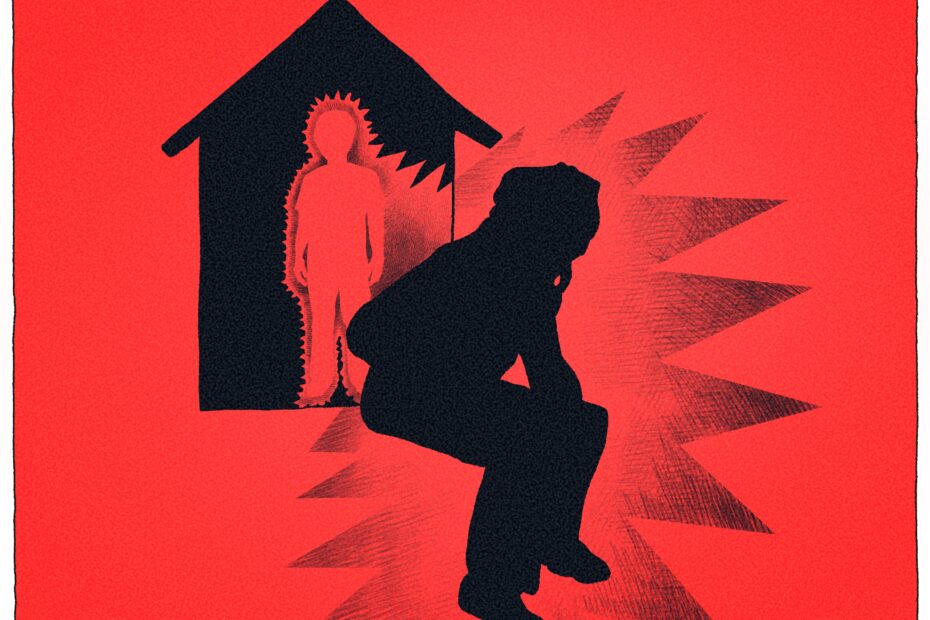
Conditional spousal immigration regulations embed inequality into the union of two equals. By introducing a power imbalance through legal asymmetry — a condition in which one partner holds immigration authority over the other — these regulatory forces create situations of dependency, where one partner’s legal status is contingent on the other’s sponsorship, a power that can be leveraged against them, opening up opportunities for exploitation and abuse.
In 2012, Canada had the Conditional Permanent Residency policy in place, which required couples to live together consecutively for two years after permanent residency was granted or risk losing legal status. This put victims of domestic abuse at risk, with many forced to choose between enduring two years of domestic violence or giving up the life they had begun to build in Canada. While the IRPR s. 72.1(6) outlined an exception in the case of abuse victims, accessing this exemption was widely regarded by legal advocates as procedurally burdensome and re-traumatic for victims, as the burden of proof for victims demanded comprehensive police reports and invasive medical examinations — leading to the policy’s repeal in 2017.
In a climate of fear and paranoia, the policy granted sponsors authority. It reinforced the view that citizenship was a privilege that the sponsor personally afforded to their spouse — one that could be revoked. When the sponsor’s authority is backed by the state, it is inevitable that a power imbalance results in the relationship. Manipulation could take the form of self- victimizing narratives about being promised a partnership and being “used” for a visa. Being unaware of one’s legal rights, the existence of the abuse exception, or availability of language learning resources could restrict newly arrived immigrants’ abilities to navigate the complex legal landscape and make them dependent on their sponsors. At the same time victims faced the emotionally taxing burden of supplying proof of abuse, which is made especially difficult if the abuser is uncooperative by withholding critical documentation and preparing to defend themselves against the possible reinvestigation into the legitimacy of their marriage. The power disparity is not a case of interpersonal relations, it is by design, a natural consequence of transposing law onto domestic life.
Examining the intersection of immigration and marriage reveals what kind of marriages the legal system legitimizes. Spousal reunification is at the mercy of the government. When we allow the state to assign legitimacy, the importance that we as a society place in the institution of marriage is revealed. It is because we validate marriage with legal recognition that these structures are given permission to grant, withhold and limit spousal partnership on the basis of borders. It is worth being skeptical of these government institutions that impose bureaucratic legal frameworks onto the very real lives of spouses and families across the world. It is not good faith, it is beyond bad faith; it is deeply un-Canadian.