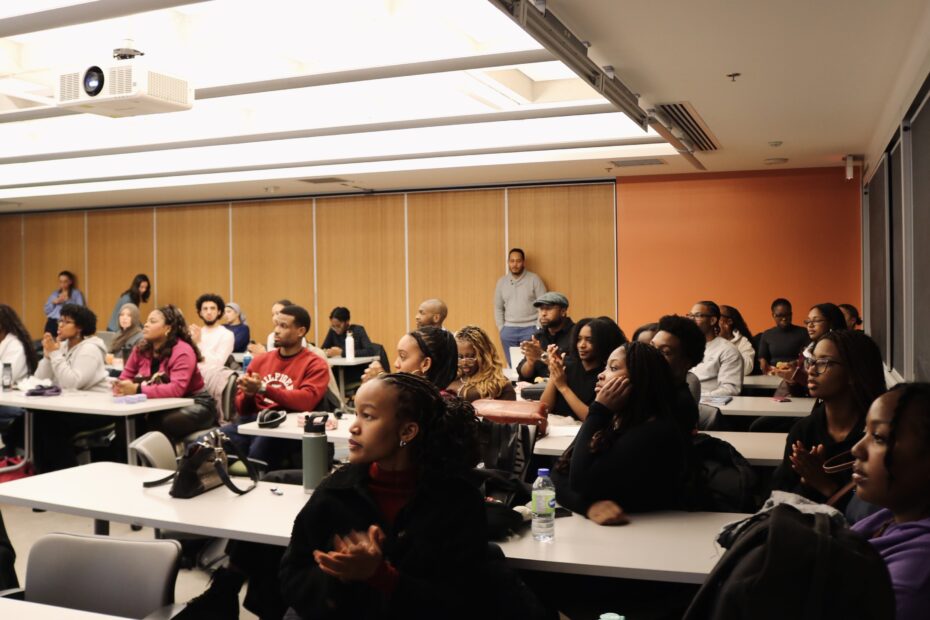
On January 22, three student associations representing Black and Afrodiasporic students at McGill — the Black Students’ Network (BSN), McGill African Students Society (MASS), and the African Studies Students Association (ASSA) — organized a roundtable discussion that brought together students and faculty members to share their experiences and resources. The event aimed to create a space where individuals could express themselves and reflect on the state of Black student and faculty representation and advocacy on campus. ASSA’s president, Zahra Hassan Doualeh, explained how the roundtable was first and foremost an opportunity for unconstrained expression: “The event aimed to create a space where individuals could express themselves and reflect on the state of Black student and faculty representation and advocacy on campus.” Invited to the discussion were Brittany Williams, McGill Faculty of Law’s Assistant Dean, and Antoine-Samuel Mauffette Alavo, who holds the position of McGill’s Black Student Affairs Liaison.
The theme “Voices and Visions,” set the tone for the evening: one where students could share their experiences with representation, access to resources, and mechanisms of discrimination, all while envisioning a future of equity and opportunity. Grassroots efforts have succeeded on campus: this February marks the ninth year of McGill’s official celebration of Black History Month, a mark of progress in the recognition of Blackness at McGill. But the single- digit anniversary is also an indicator that equity efforts are still in their formative stages.
One of the key topics of discussion at the event was Black student representation at McGill. Many voiced frustration regarding the lack of Black presence in various faculties, as well as the student body. Black people make up over four per cent of the Canadian population, yet many McGill faculties maintain significantly lower representation. Students at the roundtable expressed how seeing members of their community in positions of embodied knowledge is crucial for self-esteem and inclusion. Mauffette Alavo stressed that while the university still has crucial improvements to make, Black excellence remains integral, and more effective publicizing should be done to make the community more visible. Williams further underlined the necessity to target efforts in underrepresented areas, like STEM faculties and executive faculty positions. Both speakers recognized that initiatives of further inclusion need to be led by students. Brittany Williams noted that the university’s administration is highly receptive to students’ demands and encouraged the development of the resources they already have, such as SSMU’s Black Equity Fund, Black student internship, and research summer programs. Key people and projects are in place, but students are the fuel to the fire, the roundtable concluded.
Towards the end of the evening, the discussion progressed towards aspirations for the future. “The support of Black students is not a trend,” Mauffette Alavo asserted. Organizational stability and reliable frameworks guarantee long-term commitments and partnerships, both within the university and with outside partners.
Events like the roundtable and organizations like the BSN, MASS, and ASSA provide spaces for Black students to not only support each other but also to share their knowledge and collectively organize towards common goals. The Voices and Visions roundtable was yet another successful outcome of student-led, community-building initiatives.