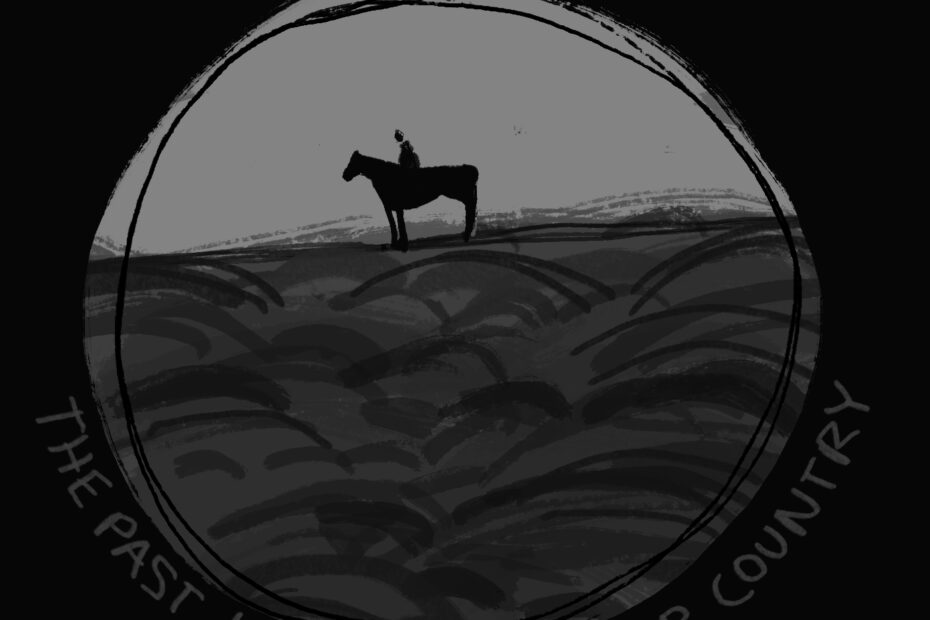
Partition is a documentary by McGill Associate Professor and Canada Research Chair in Anthropology of Living Archives, Dr. Diana Allan, between 1917 and 1948, showcasing Palestine under British occupation, acquired through accessing the British Colonial Archives of Mandate Palestine.
As one of North America’s leading documentary festivals, the Montreal International Documentary Festival (RIDM) seeks primarily to “promote and reflect on the most stimulating and diverse visions of documentary cinema.” Last year, the festival was held from November 19, 2025 and November 29, 2025. Their selections bring a newfound renewal of the audience’s relationship with the world and with documentary as an art form. On November 27 and November 29 RIDM screened Partition at the Cinémathèque Québecoise, in collaboration with Festival International Du Film Ethnographique Du Québec (FIFEQ).
Allan is an anthropologist by trade, who has worked for the duration of her professional and scholarly career with Palestinian refugees in Lebanon. The focus of her work has been documenting histories of displacement and dispossession in the camps across Lebanon, focusing on the testimonies of first generation refugees, dating back to the Nakba.
Partition has been in the works for many years in collaboration in camps across Lebanon. At the time the footage was filmed, the British Empire shot a number of films to document their colonial operations. However, much of this footage is not quite clear, and the images do not appear to be originals. That is because Prof. Allan filmed the footage from her own laptop, shot from digitized archives. The videos were then edited alongside resistance songs and the voices of Palestinian refugees in Lebanon — culminating in a project that challenges colonial authority.
Partition is not concerned with preserving a linear narrative. In true oral history fashion, it recalls over a century of occupation and displacement through the sounds of echoes and overlaying perspectives. It was described by the festival as “an invitation to rewrite Palestinian history through a decolonial lens, reflecting on the logic of the colonial gaze and the image’s complicity in its development.”
Partition is the fruit of much beautiful and creative labour, with the editing initially taking place in Lebanon and ending in Canada. Mahmoud Zeidan, a Palestinian refugee residing in Ain-al-Helweh camp in Lebanon, was co-editor on this project. Zeidan and Allan also worked together to co-found the Nakba Archive project in 2002, which comprises over 1,100 hours of footage with first-generation Palestinian refugees in Lebanon. Julian Flavin, associate director of Critical Media Lab (CML) at McGill University, worked closely with Professor Allan on Partition as the project’s sound designer. Finally, Lisa Stevenson, co-director of the CML, also played quite the role in the film’s making.
On November 29th, it was revealed that Partition won the Grand Prix of the national competition at RIDM.
On January 19, The Daily sat with Professor Allan to know the woman behind the lens, and understand the documentary’s ultimate goal.
This interview had been edited for clarity and conciseness.
Youmna El Halabi for the McGill Daily (MD): How did the idea come about to make the documentary in the first place?
Professor Diana Allan (DA): All my work as a filmmaker and as an anthropologist has focused on histories of dispossession and displacement and exile. In addition to testimonial work, I’ve also worked as an ethnographer for many years with Palestinian communities, also in [Tyre,] Beirut, mainly in [Palestinian refugee camp, Sabra and] Shatila in Beirut and in Jal al Bahr, [attending] one of these informal gatherings called the tajamua’at in the South.
My work has also been about memory, about processes of memory, and ephemeral forms of memory; highlighting the kind of narratives that maybe don’t form part of these canonical narratives of displacement, but are to do with childhood and love and labor, that are maybe less politically resonant, but are very important. I’ve been very interested in the processes of memory, and how photographs shape it. So this film kind of grows out of that, and is about what it means to encounter a kind of colonial archive from your past, from which you’ve been denied access, and what it means to experience that past, re-experience it, and reinvest it with Palestinian history and experience.
So it’s really about re-temporizing the Nakba as something that has been going on for 100 years, not 78, and scrutinizing the role that the British have played. I guess also as a British scholar, and filmmaker, I am scrutinizing my own formation within this imperial imagery as a British citizen, and it has periodically come into my work, but in a very marginal way.
As a British citizen, Allan had to consider her own relationship to these histories of Palestinian dispossession, and the fundamental role that the British have played in this history, which is often forgotten. The Palestinian plight is normally considered to have begun with the establishment of the state of Israel in 1948, often referred to as the Nakba, which means catastrophe in Arabic. However, Palestine has been under a nakba long before the established Israeli state, with British rule beginning in the 1910s.
MD: You mentioned that your work revolves a lot around memories and preserving memory. The movie is shot from the actual archives, and the zoom lens conveys that they are not original shots. How does the preservation of memory manifest in the way you chose to present the documentary?
DA: Who do these histories belong to? Who do these materials belong to? These silent films were shot between 1917 and 1948 so I came across this collection sort of randomly. I’d heard that they’d just digitized their films. I came across this material that was amazing and revelationary to me in many different ways. When I contacted the archivist, and they quoted me a really exorbitant sum for use of this material, even after I’d explained that it was for an educational project — that it wasn’t for broadcast on television — it was still exorbitant. At that point I was just like, I’m not paying a British government institution a huge amount of money to make a film about their dispossession of Palestinians. And one has to ask, well, who are these materials being preserved for? They should be preserved for stakeholder communities.
This is a decolonial project. This is about bringing these histories back into contact with Palestinian communities. And so, I felt entirely justified in reclaiming them, exhuming them from this collection, and then bringing them back into circulation, bringing them back into relation with the people whose histories are being held in these collections.
MD: How has winning the Grand Prix changed people’s perception and reception of the documentary?
DA: It has made my work more visible to my colleagues, both in my own department and in the Faculty of Arts. They sent out a notice about the award in the arts newsletter, and that was very nice. The screening at the CML [on January 16] was really packed. Partition is the first fully-fledged film that has come out of the lab, in which a community of people who are working in film and sound is really being built. It was exciting to feel the force of that community and that kind of commitment.
—
Partition was more than just a documentary reclaiming Palestinian history. In a way, it works as a sort of epic, told through blurred images, and the enchanting voice of a woman singing Palestinian folkloric songs. While tragic in its reality, it is also a story on the importance of resilience and preservation of memory – and it is a must-watch.