Content warning: violence
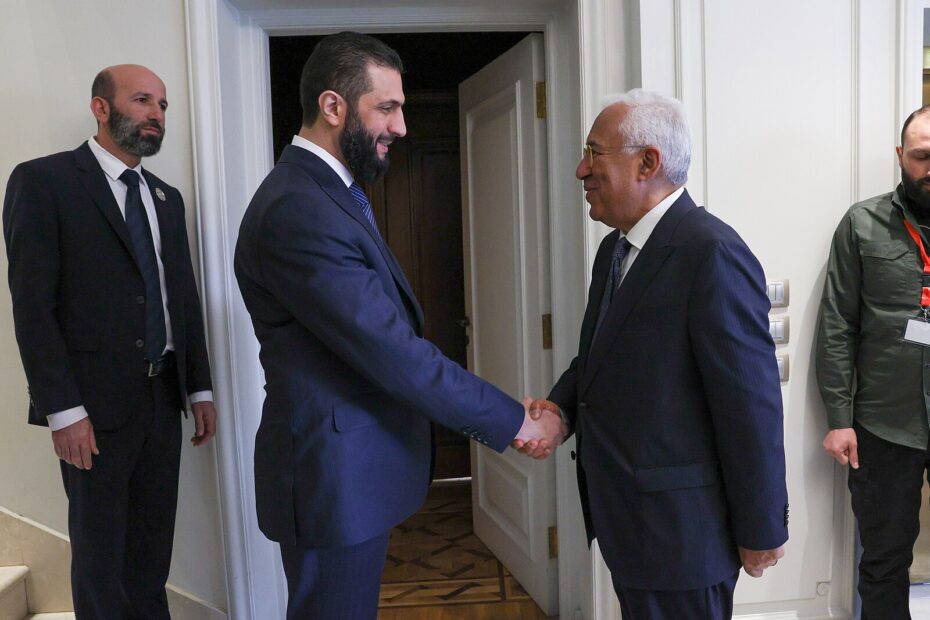
Nearly a year after the fall of the Assad regime in Syria, a delegation of the United Nations’ Security Council visited the country for the first time ever. Stéphane Dujarric, a UN Spokesperson, optimistically declared that “[the UN] hope[s] that this visit will deepen the dialogue between the United Nations and Syria.” This visit marks the end of Syrian international isolation, a goal the interim government led by Ahmed al-Sharaa is striving for. In fact, this establishment of global relations is something al-Sharaa had in mind before he came into power: his Islamist military group, Hayat Tahrir al-Sham (HTS), was supported from its early days by Turkey, which sought to make post-Assad Syria an ally on the international scene. In light of this, UN officials and organisations, like the Office of the High Commissioner for Human Rights (OHCHR), are now authorised within Syria after being banned under Assad.
Syria’s return to the international scene is also motivated by economics: the US and the European Union, aiming to discourage the formation of alliances between Syria and countries like Russia and Iran, have now lifted most of the sanctions that once strangled Damascus and the Syrian economy. Yet, the main supporters of the young Syrian government are in the Persian Gulf: Qatar and Saudi Arabia’s capital cities settled the 15$ million debt Syria had accumulated with the World Bank. This bridging of relations with the West culminated in al-Sharaa’s visit to the White House and meeting with US President Donald Trump on November 10th. On the other hand, Syria’s increased interaction with the West has weakened ties between the new Syrian government and Russia. Severing economic contracts, Damascus has stopped printing its money in Russia. Tensions have grown around Russian bases in Syria: attacks, disavowed by the Syrian government as efforts by an individual initiative of militants, targeted the Russian base of Khmeimim in May. Despite the historic hostility of HTS towards Moscow, as Russian forces frequently attacked them during the civil conflict that divided Syria from 2011 until the collapse of the Assad regime, al-Sharaa’s approach in relations with Russia seems to remain rather pragmatic.
Despite recent efforts, rebuilding the Syrian government is not only a matter of international relations. The progress of al-Sharaa’s government has been inconsistent within Syria itself – not unsurprising considering the difficulty and immensity of governance after five decades of crushing dictatorship. Even while looking to attain international legitimacy, al-Sharaa and new Syrian authorities have been unable to prevent outbreaks of violence over the past year as sectarian tensions linger in Syrian society. The Assad regime favored the Alawite sect of Shia Islam from which the family hailed, and advertised itself as protecting the Druze and Christian minorities. Since the regime’s fall, fears have risen of Sunni Muslims and Bedouins expressing their resentment through violence, attacking the aforementioned sects favoured by the regime in which they were oppressed. In March, those fears came to fruition: intercommunal violence sparked in Alawite-majority coastal areas after clashes between remnants of Pro-Assad military and new Syrian authorities, leaving over 1,400 people dead, most of them civilians. In July, clashes between Bedouin and Druze communities in southern Syria led to massacres. When government forces intervened, they showed biased support towards Bedouin Sunnis, giving them weapons and executing Druze members in an “extrajudicial manner”, according to an Amnesty International investigation. In response to the situation, central authorities put in place investigation committees and set up a trial – yet, many Syrians denounced this as merely a masquerade. Out of 300 affiliated officers and 265 paramilitary accused in the affair, only 14 were placed on trial, 7 of which were members of HTS. So far, none of them have been convicted. This has sparked serious concerns over the independence of the judicial system, shaping a budding perception of the new regime as a government that prioritises the Bedouin Sunnis over all others. Some Alawites even say that al-Sharaa’s coming to power is simply that “we’ve changed the driver of the bus…but the passengers are the same.” In contrast, when a Bedouin couple were killed south of Homs, Syria’s third largest city, with sectarian slogans scrawled on the walls next to their corpses, government forces successfully worked with tribal leaders to diffuse the situation and prevent new conflicts.
The resurgence of ISIS attacks after the fall of the Assad regime has only exacerbated Syria’s domestic instability. The power vacuum left after the dictator’s forced departure on December 8th, 2024 enabled ISIS cells to move more freely within the country and recruit members more easily, while simultaneously gaining easier access to larger quantities of arms after the dismantlement of pro-Assad forces. Indeed, despite the defeat of the “caliphate” more than half a decade ago, ISIS cells have continued decentralized, underground operations, maintaining a notable presence in Syria to this day. Nawaf Khalil, director of the Kurdish Center for Studies, an independent research center in Germany focusing on Kurdish history, explains that “ISIS benefited greatly from the fall of the regime.” The number of attacks this year seems to corroborate this: according to the Syrian Observatory for Human Rights, 224 attacks were carried out by ISIS, killing 68 soldiers of the Syrian Democratic Forces and 15 civilians.
In addition to this, despite claims by al-Sharaa’s government that they avoided engaging in conflicts with Israel, Israeli raids and incursions have plagued the south of Syria. On the 28th of November, an Israeli raid on the countryside town Beit Jinn in southwest Damascus killed thirteen people, including two children, just weeks after locals resisted an incursion by the Israeli army. Israel has argued that the raid was meant to target members of the Muslim Brotherhood’s Lebanese branch, which rebutted that “it was not active outside of Lebanon”. This is a recurrent pattern: Israeli forces frequently attack Syria, with over a thousand such attacks having occurred since the fall of the Assad regime. These strikes are carried out in spite of the UN Security Council’s demands that Israel respect the 1974 agreement and not infringe on Syrian territory anymore. The agreement had implemented a zone of separation between Syria and Israel, after the disengagement of their troops and the release of prisoners.
Even while violence continues to affect much of Syria, the interim government of al-Sharaa seems to be keeping its promise to orient the country towards a more democratic regime. The Syrian parliamentary elections held in October, while being an indirect vote, saw the casting of ballots by 6000 electoral colleges across Syria to elect two-thirds of Parliament, even without proper political parties in place, with President al-Sharaa selecting the remaining third – representing a first step towards democracy. Despite concerns over growing presidential power and inclusivity in the newly elected parliament (consisting of a nearly homogenous group of Sunni Muslim men), the recent election remains a display of the will to move away from the Assad dictatorial structure. That being said, the concerns of insufficient political representation remain non-negligible: Al Jazeera’s Osama Bin Javaid reported such concerns, writing that “If you ask the Druze in the south or the Kurds in the north, they [will] say [that the elections] were not representative.” Yet, “If you ask people in major cities, like Aleppo, Damascus, Hama, and other parts of the country, they’re hopeful that this is the first taste of a real election.” In other words, there remains a lot of work to do to attain popular representation and a democratic regime in Syria, and international attention should remain on the new regime to ensure it does not deviate from this path.
Crises in Syria are far from settled, and continued humanitarian aid to alleviate the effects of political conflict is still needed: the OHCHR now has a permanent office in Damascus to operate on the ground. However, as Mohammad Al Nsour, Chief of the Middle East and North Africa Section at OHCHR, says, “There is a political will from the government to improve,” igniting hope for the future of Syria.